0086-592-5566387
 enquiry@ticarehealth.com
We serve all people who pursue high quality and personal customization for healthy life all over the world .
Categories
Latest blog
Tags
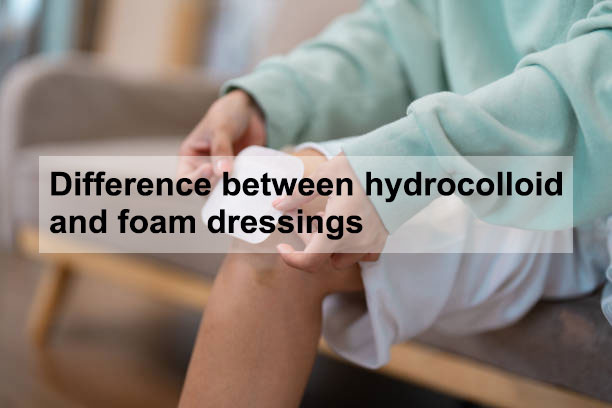
Hydrocolloid dressings and foam dressings are widely used wound care materials, each designed with different structures and performance characteristics. While both dressings are intended to protect wounds and support wound care management, they differ in absorption capacity, moisture interaction, and wear time.
Understanding the differences between hydrocolloid vs foam dressing helps buyers, distributors, and healthcare providers compare product features and select wound dressings that align with care environments, workflow needs, and procurement requirements. This article provides a neutral, educational comparison focused on product characteristics rather than treatment guidance.
A hydrocolloid dressing is an occlusive or semi-occlusive wound dressing made from gel-forming agents combined with an adhesive backing. When exposed to wound exudate, the dressing absorbs moisture and forms a soft gel layer at the wound interface.
Hydrocolloid dressings are commonly included in professional wound care products portfolios and are supplied in various sizes and shapes to accommodate different wound areas. Their adhesive design allows them to remain in place for extended periods under appropriate conditions.
A foam dressing is a wound dressing composed of absorbent polyurethane foam. It is designed to absorb wound exudate while providing cushioning and thermal insulation. Foam dressings may be supplied with or without adhesive borders and are often used as part of broader wound care solutions.
In comparisons such as foam vs hydrocolloid dressing, foam dressings are typically associated with higher absorption capacity and flexibility, particularly in wounds that produce moderate to higher levels of exudate.
The table below highlights the main product differences between hydrocolloid dressings and foam dressings in an SEO-safe, non-clinical format.
| Feature | Hydrocolloid Dressing | Foam Dressing |
|---|---|---|
| Material | Gel-forming adhesive layer | Polyurethane foam |
| Absorption Capacity | Moderate absorption | Higher absorption |
| Moisture Interaction | Forms gel with exudate | Absorbs and retains fluid |
| Wear Time | Often extended wear | Moderate wear duration |
| Flexibility | Moderate | High |
| Fixation | Self-adhesive | Adhesive or secondary fixation |
| Visibility | Opaque | Opaque or semi-opaque |
Hydrocolloid dressings are designed to interact with wound exudate and maintain a moist interface beneath the dressing. This characteristic allows for reduced dressing changes in some care environments. Foam dressings, by contrast, focus on absorbing excess exudate into the foam structure while maintaining surface protection.
These differences are important when evaluating hydrocolloid vs foam dressing options within structured wound care protocols.
Hydrocolloid dressings are often selected for situations where longer wear time is preferred, helping reduce the frequency of dressing changes. Foam dressings may require more frequent replacement depending on exudate levels and care routines.
From a procurement perspective, factors such as wear duration, change frequency, and cost per use are commonly evaluated when comparing foam vs hydrocolloid dressing options.
When comparing hydrocolloid and foam dressings, professional buyers and care providers often consider:
- Expected exudate levels
- Frequency of wound monitoring
- Care environment (hospital, clinic, home care)
- Ease of application and removal
- Storage and handling requirements
Both dressing types are commonly stocked as part of comprehensive wound care solutions and may be used alongside other wound care materials depending on care protocols.
Hydrocolloid dressings and foam dressings offer distinct material properties and performance characteristics. Hydrocolloid dressings are commonly associated with moisture interaction and longer wear time, while foam dressings are recognized for their absorption capacity and flexibility. Understanding these differences supports informed product selection without implying clinical preference or treatment outcomes.
The comparison of hydrocolloid vs foam dressing highlights how different dressing materials address varying wound care requirements. Rather than serving as interchangeable products, each dressing type fulfills specific functional roles within professional wound care systems.
To learn more about available hydrocolloid dressings and related wound care products, explore our wound care category for detailed specifications and options.
Foam dressings are generally designed with higher absorption capacity compared to hydrocolloid dressings. This makes foam dressings suitable for wounds that produce moderate to higher levels of exudate, depending on care protocols.
Hydrocolloid and foam dressings are not typically considered interchangeable. They differ in absorption behavior, wear time, and material properties, which may influence how they are selected within professional wound care systems.
Wear time varies based on wound conditions and care protocols. Hydrocolloid dressings are often associated with longer wear duration, while foam dressings may require more frequent changes depending on exudate levels.
Buyers usually consider factors such as exudate management needs, monitoring frequency, care environment, cost efficiency, and compatibility with existing wound care products when comparing foam vs hydrocolloid dressing options.

sign up for our newsletter to receive the latest news, exclusive offers, and other discount information.