0086-592-5566387
 enquiry@ticarehealth.com
We serve all people who pursue high quality and personal customization for healthy life all over the world .
Categories
Latest blog
Tags
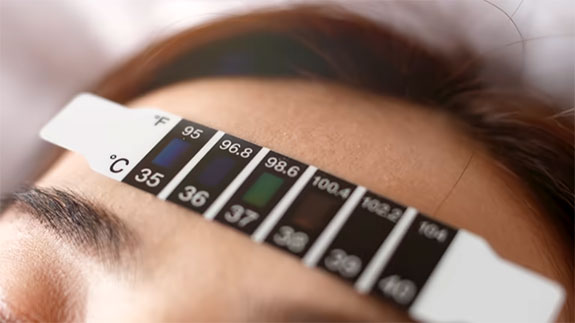
A thermometer can be a useful component of a first aid or emergency kit when rapid temperature screening is needed. For large-scale kit assembly, however, the practical requirements are different from those of a conventional household thermometer. Products need to be compact, easy to store, simple to distribute, and appropriate for the intended use.
Disposable thermometer strips provide one option for this type of application. They are designed to give a quick visual indication of temperature and can be supplied in compact, single-use formats. Because they do not depend on batteries in strip-style configurations, they can also simplify storage and deployment in kits where space, maintenance, and logistics matter.
For distributors, first aid kit manufacturers, institutional programs, and organizations assembling emergency supplies, the important question is not whether a thermometer strip can replace every type of thermometer. It cannot. The more useful question is whether a disposable temperature-indication strip is appropriate for the specific kit, application, and intended level of temperature assessment.
Disposable thermometer strips are single-use temperature-indication products designed to provide a quick visual indication of temperature. Many forehead-style strips use temperature-sensitive liquid crystal technology that changes appearance in response to heat.
Depending on the product design, the strip may display a temperature range or a color response corresponding to the temperature detected at the measurement site. The exact temperature range, accuracy, application method, and performance should always be verified against the manufacturer's product specifications and instructions for use.
Unlike electronic thermometers, strip-style products do not require a battery or electronic display. Their compact format makes them particularly suitable for applications where a simple temperature indication is more important than advanced measurement functions.
TICARE currently offers a Forehead Disposable Thermometer, model TC1192-3, designed for quick, non-invasive forehead temperature measurement. The product is listed with China as its origin and Shanghai, Guangzhou, and Xiamen as shipping ports.
Temperature-sensitive strips generally rely on materials that respond to changes in temperature.
When the strip is applied according to the manufacturer's instructions, the temperature-sensitive area reacts to heat and produces a visible color or temperature indication. This allows the user to obtain a reading without operating an electronic device.
The simplicity of the mechanism is one of the main reasons these products remain relevant for certain first aid and emergency applications.
However, a temperature strip should not automatically be treated as equivalent to a clinical electronic thermometer. The level of accuracy and the appropriate use depend on the specific product design, measurement site, environmental conditions, and labeling.
For this reason, organizations should select a strip based on its stated intended use rather than assuming that every disposable thermometer strip has identical performance.
First aid kits are designed around practical constraints. The equipment needs to be available when needed, easy to store, and appropriate for the environment in which the kit will be used.
A disposable thermometer strip can support these requirements when the kit calls for a simple temperature-screening option.
A strip-style thermometer occupies very little space compared with many conventional thermometer designs. This can be useful when a first aid kit contains numerous other medical supplies and every component needs to fit within a limited package.
Battery-free strip configurations eliminate one common source of maintenance. There is no battery to replace or recharge, which can be useful for emergency kits that may remain stored for extended periods before being opened.
A disposable design can simplify distribution and hygiene management because the individual unit does not need to be returned for cleaning and reuse.
The appropriate handling and disposal method should still follow the product instructions and the requirements of the intended application.
A strip can provide a straightforward visual indication without requiring the user to navigate an electronic interface. This can be valuable in basic first aid or emergency situations where simplicity is important.
For organizations producing or distributing first aid kits at scale, product dimensions and packaging configuration can matter almost as much as the individual product itself. Compact disposable temperature indicators can be incorporated into standardized kit configurations without adding significant equipment complexity.
The suitability of a thermometer strip depends on the intended purpose of the kit. Several applications can benefit from a compact temperature-indication option.
Emergency kits may need to support basic health assessment while remaining compact and easy to distribute.
A disposable thermometer strip can serve as a temperature-screening component when the kit specification calls for a simple, lightweight temperature indicator.
It should not be presented as a substitute for a more precise thermometer when clinical measurement or medical decision-making requires a higher level of accuracy.
Workplace first aid programs may maintain standardized kits across multiple facilities or work locations.
In these environments, compact disposable components can simplify inventory management and replacement. A strip-style thermometer can be considered where the kit specification calls for temperature screening and the product's intended use is appropriate.
Schools and childcare organizations may require simple health-screening supplies as part of their preparedness programs.
The suitability of a disposable thermometer depends on the age group, intended measurement method, product labeling, and the organization's health and safety procedures. For situations requiring more precise temperature measurement, an appropriate electronic thermometer may be preferred.
Space and weight become important considerations in travel, outdoor, and remote-use kits.
A compact disposable thermometer can provide a lightweight option for temperature indication without adding batteries, chargers, or electronic components to the kit.
Large-scale emergency programs may require thousands of standardized kits.
For these applications, procurement teams need to consider not only unit cost but also packaging, shelf life, storage requirements, consistency between batches, and the supplier's ability to maintain stable production.
The primary advantage of a disposable thermometer strip is not that it is more technologically advanced than an electronic thermometer. Its value comes from simplicity.
For appropriate applications, the main advantages can include:
Compact format. The product can be stored easily in a first aid kit or emergency supply package.
Battery-free operation. Strip-style products do not depend on battery availability.
Single-use configuration. Individual-use products can simplify hygiene and distribution procedures.
Quick visual indication. The user can obtain a temperature indication without operating an electronic display.
Simple logistics. Small, lightweight products can be convenient for kit assembly, storage, and transportation.
Scalable distribution. Disposable formats can be incorporated into large quantities of standardized kits.
These advantages make thermometer strips particularly relevant when the objective is accessible temperature screening rather than advanced temperature monitoring.
The limitations are just as important as the advantages.
A disposable thermometer strip should not be described as universally accurate or suitable for every clinical application. Its performance depends on the specific product, measurement method, temperature range, environmental conditions, and intended use.
External environmental conditions can affect temperature indication. Application technique can also influence the result. In addition, some strip products provide a range or visual indication rather than the more detailed numerical output available from an electronic thermometer.
This means that thermometer strips are best considered within a screening and preparedness context, unless the specific product has a different validated intended use.
When a temperature reading is clinically important, the appropriate thermometer and measurement procedure should be selected according to the relevant healthcare protocol.
Disposable strips and digital thermometers serve different purposes.
| Consideration | Disposable thermometer strip | Digital thermometer |
|---|---|---|
| Power source | Battery-free in strip-style designs | Usually requires a battery |
| Format | Very compact | Larger device |
| Operation | Visual indication | Digital display |
| Reuse | Generally single-use | Usually reusable depending on product |
| Maintenance | Minimal | Battery and cleaning requirements may apply |
| Storage | Easy to incorporate into compact kits | Requires protected device storage |
| Measurement detail | Depends on product design | Typically provides a numerical reading |
| Best suited to | Basic temperature screening and preparedness | More detailed temperature measurement |
The right choice depends on the purpose of the kit.
For example, a first aid kit manufacturer may choose a disposable strip when compactness and simple temperature screening are priorities. A clinical kit requiring more detailed temperature measurement may instead specify an electronic thermometer.
In some product configurations, both can have a role: a disposable strip can provide a simple initial indication, while an appropriate electronic thermometer can be used when a more detailed measurement is required.
Selecting a thermometer strip for a commercial first aid kit requires more than checking the unit price.
Confirm the temperature range and scale provided by the specific product.
The range should correspond to the intended application and be clearly communicated through the product labeling or instructions.
The temperature indication should be easy for the intended user to interpret.
Color response, printed scale design, contrast, and packaging instructions can all influence usability.
Forehead strips and other temperature-indication formats may have different application requirements.
The manufacturer should clearly specify where and how the product is intended to be used.
For large-scale kit production, consistency between batches is important.
Changes in material performance, color response, adhesive behavior, or printed markings can create problems when the same kit is distributed across multiple markets.
A supplier should be able to explain its quality-control procedures and production controls.
Packaging should match the kit assembly process.
Individual packaging may be useful for distribution and inventory control, while bulk packaging may be appropriate for organizations assembling large quantities of kits internally.
The packaging should also protect the product during storage and transportation.
Before placing a large order, confirm the product's stated shelf life and storage conditions.
This is particularly important for emergency kits that may remain in warehouses, vehicles, offices, schools, or other locations for extended periods.
The applicable regulatory requirements depend on the product's intended use, classification, destination market, and labeling.
Organizations should request the appropriate documentation from the manufacturer rather than assuming that a generic CE, FDA, or ISO statement applies to every product configuration.
For a company assembling first aid kits, the thermometer is only one component of the final product.
The strip needs to fit the kit's physical configuration, instructions, target market, packaging, and distribution model.
A useful procurement review should therefore examine:
Product specification — Confirm the exact temperature-indication range, measurement site, dimensions, and intended use.
Packaging — Determine whether individual or bulk packaging works better with the kit assembly process.
Quality consistency — Review how the manufacturer controls raw materials, production, printing, temperature indication, and finished-product inspection.
Shelf life — Confirm the available shelf life and required storage conditions.
Documentation — Request market-specific regulatory and quality documentation where applicable.
Supply capacity — Ensure that the manufacturer can support initial orders as well as repeat production.
Customization — If the thermometer strip is included in a private-label first aid kit, confirm whether packaging, labeling, instructions, and other elements can be customized.
This approach is more reliable than selecting a product solely on the lowest quotation.
For first aid kit manufacturers and distributors, disposable thermometer strips can also be incorporated into customized product programs.
Depending on the manufacturer's capabilities, customization may include:
- Private-label packaging
- Printed instructions
- Product labeling
- Packaging quantity
- Kit-specific packaging
- Brand identification
- Market-specific documentation
The exact customization options depend on the product configuration and applicable regulatory requirements.
For large-volume programs, it is advisable to confirm the final artwork, packaging specification, temperature scale, labeling language, and quality requirements before mass production begins.
Storage requirements should always follow the manufacturer's instructions.
In general, disposable temperature-indication products should be protected from conditions that could affect their materials, printed information, adhesive components, or temperature-sensitive elements.
For first aid kit manufacturers, storage should also be considered at three stages:
Factory → warehouse → finished first aid kit
A product that performs correctly when manufactured still needs appropriate packaging and storage throughout the supply chain.
This is particularly important for large institutional orders where kits may be stored for months before distribution.
Performance depends on the specific product and its intended use. Disposable strips generally provide a quick temperature indication rather than the same type of measurement provided by a clinical electronic thermometer. Always follow the manufacturer's stated accuracy, application method, and instructions for use.
They can be suitable when the kit specification calls for a compact, single-use temperature-screening product. The appropriate choice depends on the intended use and the level of measurement required.
Strip-style temperature indicators generally do not require batteries. This is one of their practical advantages for emergency and first aid kits.
Not in every situation. The two products serve different purposes. A strip may be appropriate for basic temperature screening, while a digital thermometer may be preferable when a more detailed or precise temperature measurement is required.
Many strip-style products are designed for single use. The specific product's instructions and labeling should be .
Important considerations include temperature range, measurement method, readability, product consistency, packaging, shelf life, storage requirements, documentation, production capacity, and customization options.
Private-label options depend on the manufacturer's capabilities and the product configuration. Packaging, labeling, instructions, and other customization requirements should be confirmed before production.
The terminology can vary between suppliers and products. Some forehead disposable thermometers use temperature-sensitive strips, while others may use different display technologies. The actual construction, measurement method, and intended use should be confirmed from the product specification rather than relying on the product name alone.
For organizations assembling first aid kits or emergency supply programs, the right thermometer strip should be evaluated as part of the complete kit rather than as an isolated commodity.
The most important considerations are intended use, temperature indication performance, product consistency, packaging, shelf life, regulatory documentation, and supply stability.
TICARE's current diagnostic-supply portfolio includes a Forehead Disposable Thermometer, alongside other thermometer products.
For first aid kit manufacturers, distributors, and institutional supply programs, TICARE can discuss product specifications, packaging requirements, OEM customization, and bulk supply arrangements according to the intended market and application.

sign up for our newsletter to receive the latest news, exclusive offers, and other discount information.