How Surgical Tape Is Used in Modern Hospitals
Feb 09 , 2026
Surgical tape is one of the most frequently used medical consumables in modern hospitals, yet it often receives little attention compared to more complex devices. From wound care to IV fixation, surgical tape plays a quiet but essential role in patient safety, clinical efficiency, and daily hospital workflows.
Understanding how surgical tape is used in modern hospitals helps clarify why healthcare facilities rely on multiple tape types and why proper selection and application matter in routine clinical care.
The Role of Surgical Tape in Daily Hospital Care
In hospital environments, surgical tape functions primarily as a fixation tool. Its purpose is not to treat a condition directly, but to ensure that dressings, devices, and medical materials remain securely in place during patient movement and routine care.
Because surgical tape is applied and removed repeatedly throughout the day, it must balance:
-
Reliable adhesion
-
Ease of removal
-
Skin safety
-
Compatibility with different clinical scenarios
For nurses and clinicians, tape performance directly affects workflow efficiency and patient comfort, especially in high-use settings.
Common Clinical Applications of Surgical Tape
Wound Dressing Fixation
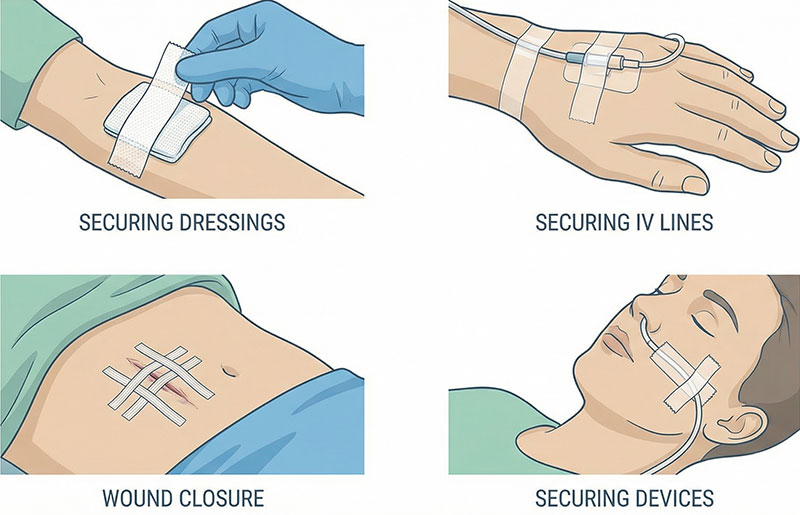
One of the most common uses of surgical tape in hospitals is securing wound dressings. Tape helps maintain dressing placement while allowing clinicians to adjust or replace dressings as needed.
In this context, surgical tape must:
-
Hold dressings securely without shifting
-
Minimize skin irritation during removal
-
Allow for frequent dressing changes
This is especially important in post-operative care and long-term inpatient treatment.
IV Line and Catheter Securement
Surgical tape is widely used for IV line and catheter fixation, where stability is critical to prevent dislodgement and reduce the risk of complications.
Key considerations include:
-
Maintaining secure fixation during patient movement
-
Allowing visibility of insertion sites when required
-
Reducing the need for frequent reapplication
Proper tape use in IV securement supports both patient safety and nursing efficiency.
Post-Operative and Supportive Applications
After surgical procedures, tape is often used to stabilize dressings, tubing, or supportive materials. In these cases, adhesion strength and durability are particularly important, as patients may be moving between departments or adjusting positions during recovery.
How Different Hospital Departments Use Surgical Tape
Operating Rooms
In operating rooms, surgical tape is used to secure drapes, tubing, and dressings under controlled conditions. Performance consistency and reliable adhesion are essential, as tape failure can disrupt procedures.
Inpatient Wards
On hospital wards, surgical tape is applied and removed frequently as part of routine care. Skin tolerance and ease of removal are especially important for elderly patients or those with fragile skin.
Emergency and Outpatient Settings
Emergency departments and outpatient clinics often require quick application and removal. Tape used in these environments must perform reliably across short-term use scenarios while remaining comfortable for patients.
Patient Safety and Skin Protection Considerations
Repeated tape application can increase the risk of medical adhesive–related skin injury (MARSI) if inappropriate products are used or if removal is not handled carefully.
Hospitals address this risk by:
-
Selecting tape materials suited to different skin conditions
-
Training staff on proper application and removal techniques
-
Avoiding unnecessary tape changes when possible
Balancing adhesion and skin protection is a key reason hospitals maintain multiple tape options rather than relying on a single type.
How Hospitals Select Surgical Tape for Different Uses
Hospitals typically evaluate surgical tape based on clinical function rather than brand preference. Selection depends on factors such as:
-
Breathability requirements
-
Need for site visibility
-
Expected wear time
-
Skin sensitivity considerations
Rather than using one universal solution, hospitals match tape characteristics to specific applications. A structured Surgical Tape portfolio supports this approach by allowing standardized selection across departments.
Standardization and Efficiency in Modern Hospitals
While hospitals use multiple types of surgical tape, they also aim to limit unnecessary variation. Standardization helps:
-
Simplify staff training
-
Reduce application errors
-
Improve inventory control
-
Maintain consistent care protocols
By clearly defining when and how each tape type is used, hospitals improve efficiency without compromising patient care.
Conclusion
Surgical tape remains a foundational tool in modern hospitals, supporting a wide range of clinical applications from wound care to IV fixation. Its role may be simple, but its impact on patient safety, workflow efficiency, and care quality is significant.
Understanding how surgical tape is used in hospitals highlights why careful selection, proper application, and standardized protocols are essential parts of modern healthcare delivery.
 0086-592-5566387
 enquiry@ticarehealth.com