0086-592-5566387
 enquiry@ticarehealth.com
We serve all people who pursue high quality and personal customization for healthy life all over the world .
Categories
Latest blog
Tags
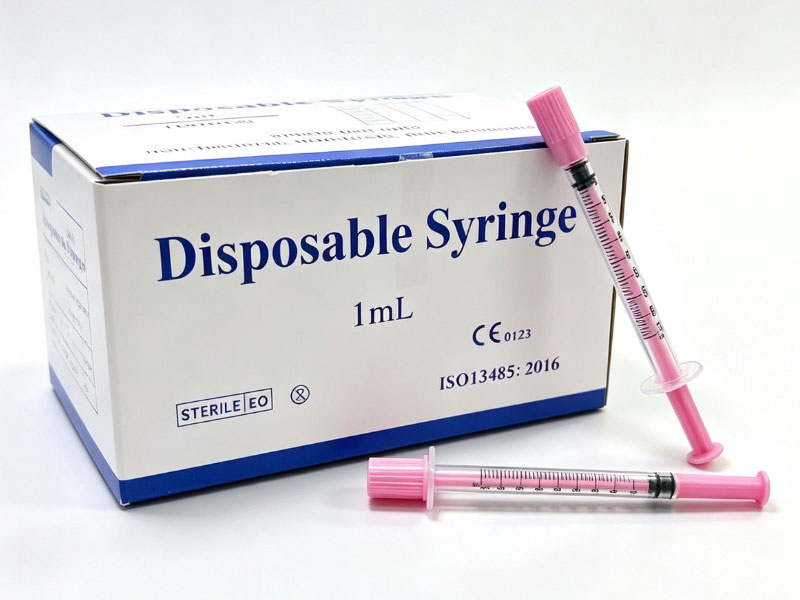
A buyer may already know that a 1 mL U-100 insulin syringe is required and still not have enough information to request comparable quotations. Capacity and insulin scale establish an important part of the product identity, but they do not define the graduation, needle gauge, needle length, needle configuration, syringe construction, packaging, or other requirements that can distinguish one offered product from another.
For procurement teams, this distinction matters. A useful specification should allow the buyer and supplier to identify the same product configuration before a quotation is compared, a sample is approved, or production begins.
The objective is therefore not to make an RFQ unnecessarily complicated. It is to define the 1 mL U-100 insulin syringe specifications precisely enough that important characteristics are not left for the supplier to assume.
The starting point is the product type, capacity, and insulin scale.
For a 1 mL syringe, 1 mL and 1 cc describe the same nominal volume. U-100, however, describes a different characteristic: the insulin scale for which the syringe markings are designed. FDA guidance identifies 1.0 mL as a standard insulin syringe volume corresponding to 100 units and separately addresses the graduated scale and markings used on insulin syringes.
That distinction is useful in procurement because capacity and scale should be treated as separate fields rather than collapsed into a vague product name.
A starting requirement might therefore read:
Product: insulin syringe
Capacity: 1 mL / 1 cc
Scale: U-100
This is much clearer than simply requesting a "1 mL syringe," but it is still not a complete purchasing specification. The next step is to define how the barrel is graduated and what needle configuration is required.
Graduation is easy to overlook because buyers sometimes assume that specifying 1 mL and U-100 automatically defines every marking on the barrel.
It does not.
The graduation should be treated as its own specification field. FDA guidance for insulin syringes specifically addresses the graduated scale, its position and length, numbering, legibility, and the requirement that the barrel scale be expressed in units of insulin.
For a procurement team, the practical issue is straightforward: do not make the supplier infer the required graduation from the syringe capacity alone.
The RFQ should state the required unit graduation, and the quotation or product specification should confirm it. This becomes particularly important when several apparently similar insulin syringes are being compared.
The buyer is not merely trying to establish that all quoted products have a 1 mL barrel. The objective is to confirm that the complete marking configuration corresponds to the requirement being sourced.
Needle gauge and needle length are also separate specifications.
A description such as 30G insulin syringe tells the supplier the gauge but does not define the needle length. Likewise, requesting an 8 mm insulin syringe does not identify whether the required needle is 30G, 31G, or another gauge.
Current insulin syringe product configurations demonstrate why the distinction matters: 1 mL syringes may be offered with different gauge and length combinations, including configurations using 30G and 31G needles and 8 mm lengths. FDA device documentation likewise describes insulin syringes across multiple gauge and needle-length combinations.
For procurement purposes, the preferred notation is therefore:
Needle gauge × needle length
For example:
30G × 8 mm
or
31G × 8 mm
This article is not intended to determine which gauge is clinically preferable for an individual user. The procurement issue is different: whichever gauge and length have been selected for the product program should be written explicitly so that competing suppliers are quoting the same requirement.
Gauge and length still do not completely identify the needle assembly.
The buyer should also establish the required needle configuration.
If a fixed needle is required, the RFQ should say so rather than assuming that every insulin syringe being offered uses the same construction. FDA guidance treats needle length, gauge, and configuration as separate physical specifications, reinforcing the importance of defining the assembly rather than relying solely on the product category name.
For a fixed-needle product, a more complete requirement might therefore state:
Needle: 31G × 8 mm, fixed
That small addition reduces room for interpretation and makes the quotation easier to check against the original requirement.
The same principle applies whenever the buyer has another controlled configuration requirement: important physical characteristics should be stated rather than inferred.
Some differences between syringes are less visible in a short catalog description but can still be relevant to product selection.
Syringe construction is one example. If a buyer requires a 2-piece construction, that requirement should be included in the specification instead of assuming that every 1 mL U-100 syringe uses the same design.
Dead-space configuration can be treated similarly.
If low-dead-space construction is part of the required product configuration, it should be identified and confirmed with the supplier. The phrase should describe a defined product characteristic rather than being used as an unsupported performance claim.
This distinction is important when preparing procurement documents. A specification should state what construction is required; technical or performance claims should only be made where they are supported by appropriate product-specific evidence.
By this stage, the requirement has moved substantially beyond a generic request for "1 mL U-100 syringes."
Before discussing price or packaging, it is useful to consolidate the physical requirement.
A procurement-ready specification may include the following fields:
| Specification field | What the buyer should define |
|---|---|
| Product type | Insulin syringe |
| Capacity | 1 mL / 1 cc |
| Insulin scale | U-100 |
| Graduation | Required unit graduation |
| Needle gauge | Required gauge |
| Needle length | Required length |
| Needle configuration | Fixed needle or other defined configuration |
| Construction | Required syringe construction |
| Dead-space requirement | Required configuration, if applicable |
The purpose of this framework is not to suggest that every procurement program must contain exactly the same fields. It is to prevent a quotation from appearing comparable when a material product characteristic has actually been left undefined.
This is also why 1 mL U-100 insulin syringe procurement should be specification-led rather than price-led. Price becomes meaningful only after the products being compared have been normalized to the same requirement.
Once the physical product is defined, the buyer can add the commercial information required for an actionable quotation.
Packaging should be described clearly enough to understand how the product will be supplied. Depending on the procurement program, this can include the number of syringes per primary pack or box, boxes per carton, labeling requirements, and any specific packaging format that must be evaluated.
The RFQ should also state the required quantity. This allows the supplier to confirm MOQ, pricing basis, production conditions, and lead time against an actual purchasing requirement instead of issuing a quotation based on assumptions.
Other relevant information may include sample requirements, destination market, required product or quality documentation, and whether OEM, private-label, or custom-packaging requirements apply.
The objective is to separate two questions clearly:
What product do we require?
and
How must that product be supplied?
Both are important, but they should not be confused.
A useful RFQ does not need to be several pages long. It needs to make the controlled requirements visible.
A concise insulin syringe RFQ framework could contain:
| RFQ field | Requirement to define |
|---|---|
| Product | Insulin syringe |
| Capacity | 1 mL / 1 cc |
| Scale | U-100 |
| Graduation | Required unit graduation |
| Needle gauge | Required gauge |
| Needle length | Required length |
| Needle configuration | Fixed or other required configuration |
| Construction | Required design |
| Dead space | Required configuration, where applicable |
| Packaging | Required packaging arrangement |
| Quantity | Initial and/or expected order quantity |
| Documentation | Required technical, quality, or regulatory documentation |
| Customization | OEM, private-label, or packaging requirements |
| Destination | Country or target market |
The exact fields can be adapted to the buyer's procurement system. The important point is that the same controlled requirement should be sent to suppliers that will later be compared.
Current procurement-oriented guidance similarly emphasizes that U-100 alone is insufficient to define an exact purchasing requirement and that capacity, graduation, needle specifications, configuration, packaging, and other identifying fields need to be controlled.
Once suppliers respond, the original specification becomes the reference for evaluating their offers.
This is where specification discipline has a direct commercial consequence.
Suppose one supplier quotes a 1 mL U-100 syringe with a 30G × 8 mm fixed needle while another quotes a 31G × 8 mm configuration. Comparing the headline unit price without acknowledging that difference would not be a like-for-like comparison.
The same principle applies to construction, packaging, documentation, MOQ, and lead time.
A quotation review should therefore identify any difference between the requested specification and the offered product. If the supplier proposes a substitute or alternative configuration, the deviation should be visible rather than silently incorporated into the quotation.
A lower price does not necessarily represent a better commercial offer when the underlying specifications differ.
Quotation comparison is not the end of the specification process.
Where sampling forms part of the procurement procedure, the sample provides an opportunity to confirm that the offered configuration corresponds to the requirement that was quoted.
The process can be viewed as a controlled sequence:
Requirement → RFQ → quotation → sample → verification → approval → production
At each stage, the underlying product definition should remain consistent.
The buyer can verify relevant characteristics against the approved requirement and resolve differences before production rather than after an order has been manufactured.
This also makes the specification more than an RFQ document. It becomes a common reference connecting the initial requirement, supplier offer, sample evaluation, and subsequent commercial approval.
Consider the difference between these two descriptions:
1 mL U-100 insulin syringe
and:
1 mL U-100 insulin syringe with unit graduation, fixed 30G × 8 mm needle, 2-piece construction, and low-dead-space configuration.
The first description establishes the product category, capacity, and insulin scale.
The second identifies additional characteristics that materially narrow the product configuration.
A buyer may need to add still more information—such as packaging, quantity, documentation, and customization requirements—but the second description provides a much stronger basis for requesting a comparable quotation.
This illustrates the central procurement principle: a useful specification reduces the number of important characteristics that either party must assume.
Once the required specifications have been defined, buyers can compare available products against the same criteria rather than selecting a syringe on the basis of capacity, gauge, or price alone.
For buyers whose sourcing requirement includes a differentiated pink configuration, TICARE's pink 1 mL U-100 insulin syringe is available with a fixed 30G or 31G × 8 mm needle, 2-piece construction, unit graduation, and a low-dead-space configuration, with supply and customization requirements confirmed according to the procurement project.
A 1 mL U-100 designation is an important starting point, but professional procurement requires a more complete product definition.
Capacity, insulin scale, graduation, needle gauge, needle length, configuration, construction, and any relevant dead-space requirement together establish the physical product being requested. Packaging, quantity, documentation, and customization requirements then make that product definition commercially actionable.
When these fields are established before quotation, the buyer gains a consistent reference for comparing supplier offers, evaluating samples, and confirming the product before production.
The result is not a more complicated RFQ. It is a clearer one.

sign up for our newsletter to receive the latest news, exclusive offers, and other discount information.