+86-13950196535, 086-592-5566387
 enquiry@ticarehealth.com
We serve all people who pursue high quality and personal customization for healthy life all over the world .

Selecting the correct rectal tube size is a practical decision that directly affects clinical performance, patient comfort, and procurement efficiency.
For distributors and medical buyers, understanding how sizes work is not just technical knowledge—it helps ensure the right product mix, avoid inventory waste, and meet hospital requirements.
This guide explains rectal tube sizes (Fr 10–36), how they are measured, and how to choose the right size for different applications.
Rectal tube sizes are measured using the French (Fr) scale, a standard system used across medical tubing.
The relationship is simple:
- 1 Fr = 0.33 mm (diameter)
This means:
- Larger Fr number → larger outer diameter
- Smaller Fr number → thinner tube
For buyers, this directly affects:
- Flow capacity
- Patient comfort
- Clinical suitability
Below is a typical conversion reference used in procurement and product comparison:
| Size (Fr) | Diameter (mm) | Typical Application |
|---|---|---|
| 10 Fr | 3.3 mm | Pediatric / small patients |
| 12 Fr | 4.0 mm | Pediatric / light use |
| 14 Fr | 4.7 mm | Transition size |
| 16 Fr | 5.3 mm | Standard adult (light use) |
| 18 Fr | 6.0 mm | Common adult use |
| 20 Fr | 6.7 mm | Gas relief / enema |
| 22 Fr | 7.3 mm | General adult drainage |
| 24 Fr | 8.0 mm | Higher flow applications |
| 26 Fr | 8.7 mm | Clinical drainage |
| 28–30 Fr | 9.3–10.0 mm | Heavy drainage use |
| 32–36 Fr | 10.7–12.0 mm | Maximum flow / specialized use |
Most manufacturers produce rectal tubes within the Fr 10–36 range, covering both pediatric and adult applications.
In practice, sizes can be grouped into three categories:
- Small sizes (Fr 10–14) are typically used for pediatric or sensitive cases where comfort is critical.
- Medium sizes (Fr 16–22) represent the most commonly used range in hospitals and clinics.
- Large sizes (Fr 24–36) are used when higher flow or drainage capacity is required.
For distributors, the medium range (Fr 16–22) usually accounts for the highest sales volume.
Choosing the correct size depends on clinical use, patient type, and purchasing strategy.
Smaller sizes are generally preferred for pediatric or sensitive patients, while standard adult use typically falls within the mid-range sizes.
Procedures such as gas relief or enema often use medium sizes, while drainage applications may require larger diameters for higher flow.
Many hospitals standardize a limited range of sizes to simplify procurement and training. Buyers supplying institutional clients should align with these preferences.
For B2B buyers, the goal is not to offer every size, but to optimize the size mix based on real demand
While size is important, performance also depends on material and flexibility.
Rectal tubes are commonly made from medical-grade PVC or silicone. PVC tends to offer more structural rigidity, which can support insertion and shape retention, while silicone provides greater flexibility and comfort.
At larger sizes, material choice becomes even more important, as it affects handling, patient tolerance, and overall performance.
For wholesalers and distributors, size selection is also a commercial decision.
Instead of stocking the full size range, most buyers focus on:
- High-demand sizes (typically Fr 16–22)
- A limited number of smaller and larger sizes for coverage
This approach helps:
- Reduce inventory pressure
- Improve stock turnover
- Simplify SKU management
Efficient size planning can significantly improve profitability and supply chain efficiency
Even experienced buyers can make avoidable mistakes.
One common issue is overstocking low-demand sizes, which ties up capital and warehouse space. Another is ignoring regional or institutional preferences, leading to mismatched supply.
Some buyers also rely only on size without considering material differences or application requirements, which can affect product performance.
A more effective approach is to combine clinical understanding with market demand data.
For buyers working with OEM manufacturers, size selection can go beyond standard options.
Many factories support:
- Custom diameter or length adjustments
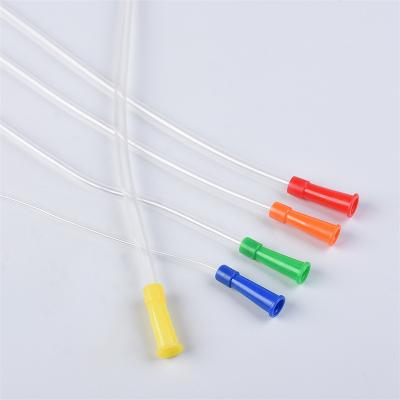
- Color coding for size identification
- Tailored packaging for specific size combinations
This allows distributors to create product lines that match their market positioning and customer needs.
Understanding rectal tube sizes is not just about knowing measurements—it is about making informed purchasing decisions.
Buyers who choose the right size range can:
- Improve product usability
- Reduce inventory waste
- Better meet clinical requirements
In competitive markets, this level of precision becomes a key advantage in both sales and operations.
If you are sourcing from a professional rectal tube manufacturer, selecting the right sizes is the first step.
We support:
- Standard and customized size ranges (Fr 10–36)
- OEM packaging and branding
- Stable production and global supply
Contact us to get a full size chart, sample kits, and product recommendations
Fr (French) is a unit of diameter, where 1 Fr equals 0.33 mm.
Most adult applications use Fr 16–22, depending on the procedure.
Divide the Fr value by 3 to get the approximate diameter in millimeters.
Not necessarily. Larger sizes increase flow but may reduce comfort, so selection depends on the application.
Yes, OEM manufacturers can adjust size, length, color coding, and packaging.

sign up for our newsletter to receive the latest news, exclusive offers, and other discount information.