+86-13950196535, 086-592-5566387
 enquiry@ticarehealth.com
We serve all people who pursue high quality and personal customization for healthy life all over the world .
Categories
Latest blog
Tags
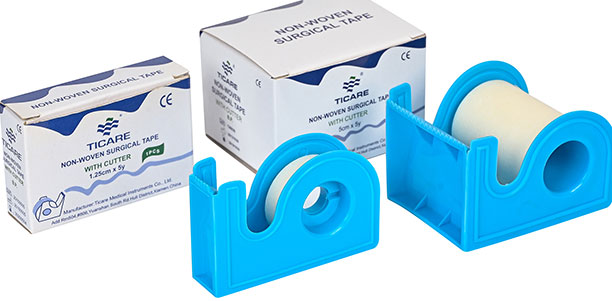
While surgical tape remains a high-volume consumable across hospitals, clinics, and emergency care environments, wholesale pricing structures vary significantly depending on raw materials, manufacturing processes, certification scope, packaging configuration, and order volume.
Understanding the core pricing drivers allows distributors to:
- Negotiate effectively
- Forecast margins accurately
- Avoid hidden compliance costs
- Ensure long-term supply continuity
This guide outlines the primary factors that influence bulk surgical tape pricing in 2026 and how procurement teams can evaluate supplier proposals strategically.
One of the most significant cost variables is material selection.
Common backing types include:
- Non-woven fabric
- Silk
- Polyethylene (PE) film
- Microporous paper
Non-woven and micropore variants often require breathable substrates with consistent tensile strength, increasing raw material costs. Silk tape typically involves woven backing, which can be more expensive due to textile processing.
Adhesive systems vary:
- Zinc oxide-based
- Acrylic-based
- Hot melt adhesives
Latex-free and hypoallergenic formulations tend to carry higher production costs due to regulatory testing and raw material selection.
Distributors supplying hospital networks often prioritize medical-grade surgical tape products that meet institutional skin safety standards.
Compliance significantly impacts wholesale pricing.
Manufacturers operating under ISO 13485 quality systems incur:
- Annual certification audit fees
- Documentation management costs
- Risk management processes
- CAPA systems
Additionally, suppliers with FDA registration or CE marking must maintain updated technical documentation and regulatory filings.
These compliance investments increase baseline production costs but reduce risk exposure for distributors entering regulated markets such as:
- United States
- European Union
- Middle East hospital tenders
Lower-priced suppliers without complete documentation may expose distributors to customs delays, regulatory penalties, or lost tender eligibility.
Minimum Order Quantity (MOQ) directly affects unit pricing.
Manufacturers calculate MOQ based on:
- Production line setup time
- Coating batch size
- Packaging configuration
- Label customization
Higher volume orders typically reduce per-unit cost due to economies of scale in adhesive coating and slitting operations.
For distributors planning private label programs, MOQs may increase due to:
- Customized inner cores
- Printed packaging
- Multilingual labeling
- Barcode integration
Clarifying MOQ early in negotiations prevents margin miscalculations.
Wholesale pricing also reflects packaging complexity.
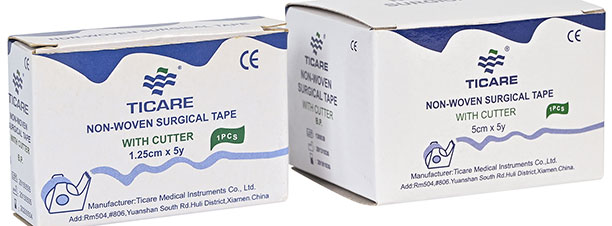
- Bulk cartons
- Neutral labeling
- Standard roll sizes
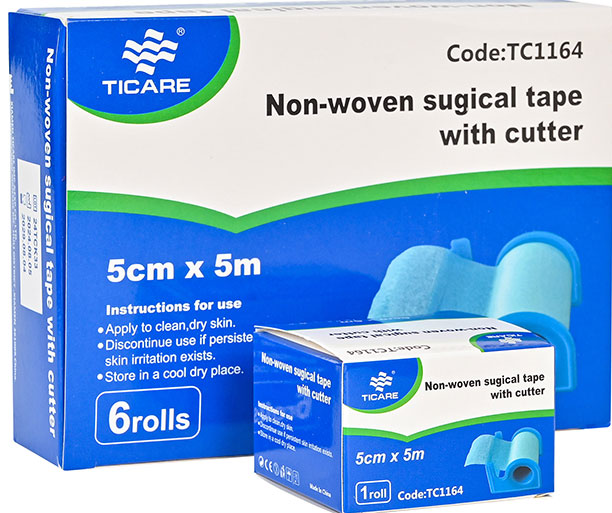
Private label programs may require:
- Custom brand printing
- Retail-ready packaging
- Instruction inserts
- Shelf-ready display boxes
Each customization step adds:
- Graphic design setup cost
- Printing plate cost
- Inventory management complexity
Distributors should evaluate whether private labeling increases market competitiveness enough to offset additional production expense.
In 2026, supply reliability carries measurable value.
Manufacturers with:
- Stable raw material sourcing
- Large-scale coating capacity
- Automated slitting lines
- Multi-line redundancy
may offer slightly higher pricing but provide lower disruption risk.
Supply interruptions in medical consumables can damage distributor credibility with hospital clients. Therefore, pricing analysis should include risk-adjusted cost, not only base unit price.
For importers, landed cost often differs significantly from factory quotation.
Key variables include:
- Ocean freight rates
- Container availability
- Port congestion
- Customs duties
- Medical device import documentation
Some regions apply specific regulatory clearance requirements for medical consumables, adding administrative expenses.
Distributors should request:
- HS code confirmation
- Packaging dimensions per carton
- Gross and net weight
- Estimated pallet configuration
Accurate freight forecasting ensures correct margin planning.
Inconsistent adhesion performance or packaging defects can generate:
- Product returns
- Credit notes
- Replacement shipments
- Reputational damage
Suppliers with strong in-process quality control systems typically demonstrate:
- Batch-to-batch adhesion testing
- Controlled coating thickness
- Structured final inspection
Although such suppliers may not offer the lowest price, they reduce hidden downstream costs for distributors.
Global demand for surgical tape remains stable due to:
- Aging populations
- Increased surgical procedures
- Growth in outpatient care
- Expansion of home healthcare markets
However, buyers increasingly prefer:
- Latex-free adhesives
- Breathable materials
- Transparent regulatory documentation
Distributors aligning product selection with these trends may justify higher pricing through value-based positioning.
When evaluating multiple wholesale proposals, distributors should compare:
- Unit price per roll
- Roll length and width
- Adhesive type
- Certification scope
- MOQ
- Lead time
- Payment terms
- Production capacity
A lower nominal price may mask:
- Shorter roll length
- Weaker adhesive formulation
- Limited certification
- Inconsistent supply capacity
A structured comparison matrix improves negotiation outcomes.
Although exact pricing varies by region and specification, wholesale quotations often reflect:
- Base production cost
- Compliance overhead
- Packaging cost
- Margin structure
- Freight estimation (FOB/CIF terms)
For regional medical supply companies, understanding which components are flexible during negotiation helps improve long-term purchasing agreements.
In 2026, successful surgical tape sourcing depends on balancing:
- Regulatory compliance
- Cost efficiency
- Production scalability
- Private label capability
- Risk mitigation
Rather than focusing exclusively on lowest price, distributors are increasingly evaluating total supply partnership value.
Manufacturers capable of supporting bulk medical-grade surgical tape production with documented compliance and scalable output may provide stronger long-term margin protection.
For distributors requiring:
- Adhesion performance data
- Roll size customization
- Private label configuration
- MOQ clarification
- Export packaging details
You may request a full technical specification sheet for review prior to quotation comparison.
Request a detailed surgical tape specification sheet including adhesion performance data, material composition, and packaging configurations.
If you are sourcing for:
- Regional hospital networks
- Government tenders
- Long-term supply contracts
- Private label distribution
You may submit your projected annual volume and packaging requirements to receive structured MOQ and production capacity feedback.
Submit your projected annual volume and private label requirements to receive MOQ details and production capacity confirmation.
Wholesale pricing for surgical tape in 2026 is shaped by multiple interconnected factors, including raw material selection, adhesive technology, regulatory compliance, MOQ structure, packaging customization, and logistics considerations.
Distributors and importers who evaluate pricing holistically—rather than focusing solely on unit cost—are better positioned to secure reliable supply partnerships, protect margins, and maintain regulatory eligibility in institutional healthcare markets.
Careful analysis of compliance documentation, production capacity, and customization capability ensures more predictable long-term outcomes in medical consumables distribution.

sign up for our newsletter to receive the latest news, exclusive offers, and other discount information.