+86-13950196535, 086-592-5566387
 enquiry@ticarehealth.com
We serve all people who pursue high quality and personal customization for healthy life all over the world .
Categories
Latest blog
Tags
Surgical tape is one of the most widely used medical consumables in hospitals, clinics, laboratories, and emergency care settings. Despite being a relatively low-cost product, it plays a critical role in securing medical devices, stabilizing dressings, and protecting wound sites during treatment.
In 2026, procurement teams across the healthcare sector are facing several challenges when sourcing surgical tape products. These challenges include regulatory compliance requirements, increasing product differentiation across materials and adhesives, supply chain reliability, and cost control.
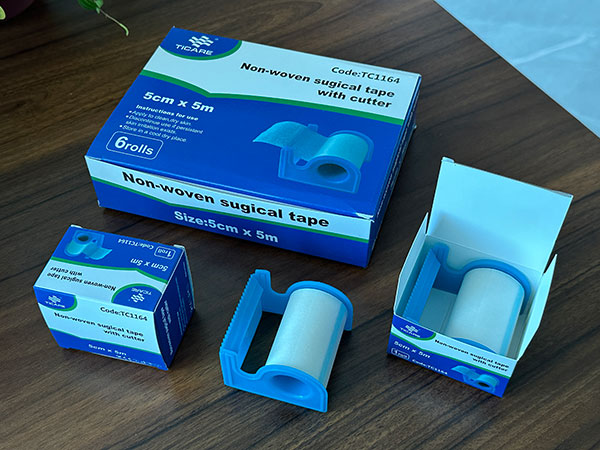
This guide provides a comprehensive overview of the global surgical tape market, including material types, manufacturing considerations, regulatory frameworks, and procurement strategies. It is designed to support healthcare procurement professionals, medical distributors, and importers in making informed sourcing decisions.
The surgical tape market is part of the broader wound care and medical consumables sector. Demand is driven primarily by the global expansion of healthcare services, rising surgical procedures, and the increasing use of disposable medical supplies.
Key market drivers include:
- Increasing global surgical procedures
- Expansion of hospital infrastructure in emerging markets
- Rising demand for infection control solutions
- Growth of outpatient and home healthcare services
Surgical tape products are commonly used in:
- Hospitals
- Outpatient surgical centers
- Emergency care units
- Long-term care facilities
- Home healthcare environments
Procurement departments typically purchase surgical tape in large volumes as part of general medical supply contracts.
The global market for surgical tape continues to expand steadily due to increased healthcare spending and medical procedure volumes.
Industry analysts estimate that:
- The global surgical tape market exceeded USD 3.2 billion in 2024
- Market value is projected to reach USD 4.5–5.0 billion by 2030
- Average annual growth rate is approximately 5–6%
Growth is strongest in the following regions:
High demand due to advanced healthcare infrastructure and strict medical regulations.
Stable growth driven by aging populations and surgical demand.
The fastest growing region due to expanding healthcare infrastructure and large population bases.
Increasing imports of medical consumables to support hospital development.
Surgical tape is manufactured using different backing materials and adhesive systems. Each type is selected based on clinical application and skin sensitivity requirements.
The most common categories include:
- Microporous non-woven surgical tape
- Transparent PE surgical tape
- Silk surgical tape
- Paper medical tape
- Cloth surgical tape
Healthcare buyers often select products based on breathability, adhesion strength, and patient comfort.
For a full overview of available medical fixation products, buyers can review the Surgical Tape options available for clinical use.
Material composition plays a critical role in determining surgical tape performance.
Microporous non-woven materials allow air circulation and moisture evaporation. These tapes are commonly used for long-term fixation of dressings or medical devices.
They are widely available as Microporous Non-woven Surgical Tape, which is known for skin-friendly performance and easy tearability.
PE surgical tapes provide transparent fixation, allowing clinicians to observe the skin beneath the tape.
This design is commonly used in Transparent PE Surgical Tape, which offers moisture resistance and reliable adhesion.
Silk-based surgical tapes provide stronger fixation and are typically used when secure attachment is required.
An example is Silk Surgical Tape, which offers high tensile strength and durability.
Adhesive formulation directly affects product performance and patient safety.
Common adhesive systems include:
Hot melt adhesives are widely used due to their strong bonding properties and cost efficiency.
Advantages include:
- Strong initial adhesion
- Fast manufacturing processes
- Stable bonding performance
Acrylic adhesives are commonly used for medical applications requiring improved skin compatibility.
Benefits include:
- Lower risk of allergic reactions
- Long-term adhesion stability
- Good performance under moisture exposure
Surgical tape is used in a wide range of clinical procedures.
Typical medical applications include:
Surgical tape is frequently used to stabilize gauze, bandages, and wound dressings.
Healthcare professionals rely on tape to secure:
- Intravenous catheters
- Drainage tubes
- Monitoring cables
Tape can help protect surgical incision areas by supporting surrounding dressings.
Emergency response teams use surgical tape to secure temporary wound coverings and splints.
Medical tape is regulated as a medical device in most international markets. Compliance requirements vary depending on regional regulations.
Medical tapes are regulated by the U.S. Food and Drug Administration as Class I medical devices under general controls.
Manufacturers must follow:
- Quality system regulations
- Device registration requirements
- Labeling compliance
In Europe, surgical tape products must comply with the EU Medical Device Regulation (MDR).
Manufacturers must demonstrate:
- Safety and performance
- Risk management
- Clinical evaluation documentation
Many manufacturers operate under the ISO 13485 certification framework to ensure consistent manufacturing quality.
When sourcing surgical tape products, procurement teams evaluate multiple factors beyond price.
Key technical specifications include:
- Adhesion strength
- Breathability
- Tearability
- Skin compatibility
Reliable suppliers maintain:
- Stable production capacity
- Consistent product quality
- International regulatory compliance
Packaging formats affect hospital storage and distribution efficiency.
Common formats include:
- Plastic reel packaging
- Paper roll packaging
- Dispenser packaging
- Sterile blister packaging
Global medical supply chains have experienced significant disruption in recent years. Healthcare buyers are increasingly prioritizing supply security when selecting suppliers.
Key supply chain trends include:
Buyers are sourcing from multiple regions to reduce dependency on a single supplier.
Distributors are establishing regional warehouses to improve delivery times.
Hospitals are maintaining higher inventory levels of essential medical consumables.
Several emerging trends are expected to shape the surgical tape industry over the next decade.
Manufacturers are investing in improved adhesives to reduce skin irritation.
Environmental sustainability is becoming a priority for healthcare procurement teams.
New material technologies are being developed to improve moisture control and patient comfort.
Surgical tape remains an essential component of modern healthcare operations. While the product may appear simple, its material composition, adhesive technology, regulatory compliance, and manufacturing quality all play critical roles in clinical performance.
Healthcare procurement teams and distributors must carefully evaluate suppliers based on product reliability, regulatory compliance, and supply chain stability.
As healthcare systems continue to expand globally, demand for high-quality surgical tape products is expected to grow steadily. Buyers who understand market trends, regulatory frameworks, and material technologies will be better positioned to make informed sourcing decisions.

sign up for our newsletter to receive the latest news, exclusive offers, and other discount information.