0086-592-5566387
 enquiry@ticarehealth.com
We serve all people who pursue high quality and personal customization for healthy life all over the world .

For distributors, importers, and medical brands, selecting the right OEM rectal tube manufacturer is not just a sourcing decision—it directly affects product quality, regulatory compliance, delivery stability, and long-term profitability.
If you are planning to launch a private label or secure a long-term supply, understanding how OEM manufacturing works will help you avoid costly mistakes and choose the right partner from the start.
A capable OEM supplier should support precise and consistent customization, not just basic variations.
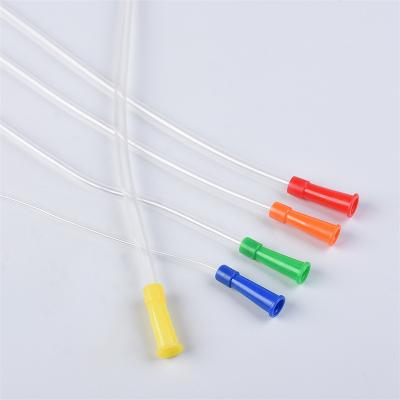
In most projects, buyers define requirements such as size range (commonly Fr 10–36), material selection (PVC or silicone), tube length, tip structure, and side hole design. Sterility is another critical decision—products can be supplied as sterile (EO) or non-sterile, depending on the target market.
Equally important is standardization across batches. For distributors, consistency is often more valuable than extreme customization, especially when supplying hospitals or long-term clients.
In medical sourcing, certification is not optional—it is the foundation of market access.
At a minimum, your supplier should operate under ISO13485, which ensures a compliant quality management system. For market entry, CE marking is required in the EU, while FDA registration is necessary for the United States.
Beyond documentation, experienced buyers also verify sterilization validation, material safety, and batch traceability. These factors determine whether your products pass customs smoothly and perform reliably in clinical use.
Understanding the process helps you avoid delays and miscommunication.
Clear communication at each stage ensures consistent product quality
These are often the most practical concerns for wholesale buyers.
Most manufacturers require a minimum order quantity between 5,000 and 50,000 units, depending on customization level. Production typically takes 15–30 days, while sample development may require about one week.
What matters more than the numbers themselves is whether the supplier can scale production consistently. Reliable OEM partners are able to support both initial orders and long-term volume growth without compromising quality.
Packaging plays a dual role: regulatory compliance and brand positioning.
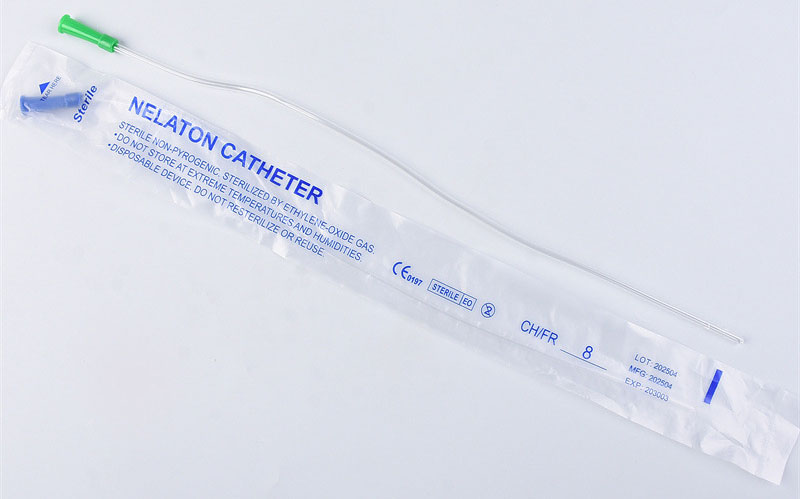
Rectal tubes are usually packed either in individual sterile pouches or in bulk configurations for hospital use. OEM buyers often require custom outer boxes, printed instructions, barcodes, and multilingual labeling.
Well-designed packaging not only improves brand perception but also optimizes shipping efficiency and reduces logistics costs.
Pricing in OEM manufacturing is not fixed—it is driven by several interconnected factors.
Material choice has a direct impact, with silicone typically costing more than PVC. Order volume significantly influences unit price, while customization and packaging add incremental costs. Sterilization requirements can also increase production expenses.
For most buyers, the key is not finding the lowest price, but achieving a stable balance between cost, quality, and compliance.
International buyers must evaluate not only the product, but also the supplier’s export capability.
A qualified manufacturer should provide complete documentation, including commercial invoice, packing list, and bill of lading, and understand the compliance requirements of your target market. Shipping methods—whether air or sea—should be selected based on urgency and order volume.
Suppliers with strong export experience help reduce risks such as customs delays, documentation errors, and unexpected costs.
Many sourcing problems come from avoidable decisions.
Buyers who focus only on price often face quality inconsistencies later. Others overlook certification requirements, leading to customs issues. Incomplete technical communication is another frequent cause of incorrect production.
A more strategic approach is to treat supplier selection as a long-term partnership decision, not a one-time transaction.
Professional buyers evaluate suppliers beyond basic quotations.
A reliable manufacturer demonstrates valid certifications, stable production capability, clear communication, and proven export experience. Requesting samples, reviewing test reports, and confirming packaging details are all standard steps in a serious procurement process.
Suppliers who respond quickly and provide clear documentation are usually better equipped to handle long-term cooperation.
| Factor | OEM | Standard Product |
|---|---|---|
| Customization | High | Limited |
| Branding | Yes | No |
| MOQ | Higher | Lower |
| Cost per unit | Lower (bulk) | Higher |
| Flexibility | High | Low |
For distributors and brand owners, OEM is typically the better choice because it supports market differentiation and long-term cost control.
OEM rectal tube manufacturing is not just about producing a product—it is about building a reliable and scalable supply system.
Buyers who invest in the right manufacturing partner gain stronger control over quality, branding, and margins, while reducing operational risks.
If you are sourcing from a professional OEM rectal tube manufacturer, the next step is to evaluate real capabilities.
We support:
- Custom specifications and private label packaging
- ISO13485 and CE-compliant production
- Fast sampling and stable lead times
- Global shipping support
Request a quotation, sample, and packaging details within 24 hours
It refers to producing rectal tubes based on your specifications and branding, rather than selling standard products.
Most suppliers require 5,000–50,000 units, depending on customization.
Production usually takes 15–30 days, excluding shipping.
Yes, including branding, labeling, and carton design.
At minimum: ISO13485, CE (EU), and FDA registration (US).

sign up for our newsletter to receive the latest news, exclusive offers, and other discount information.