0086-592-5566387
 enquiry@ticarehealth.com
We serve all people who pursue high quality and personal customization for healthy life all over the world .
Categories
Latest blog
Tags
Blood lancets are small, simple devices—but they sit at the center of one of the most critical diagnostic processes in global healthcare: capillary blood sampling.
From diabetes management to hospital diagnostics, lancets are used billions of times every year. According to the World Health Organization and International Diabetes Federation, the number of people living with diabetes continues to rise sharply, driving massive demand for safe, reliable blood sampling tools.
- A typical diabetes patient tests 1–4 times per day
- That equals up to 1,460 lancets per patient annually
- Hospitals and labs use lancets at even higher volumes
“Regular blood glucose monitoring is essential for preventing complications.” — Centers for Disease Control and Prevention
For B2B buyers—distributors, hospitals, and procurement managers—choosing the right blood lancet is not just a purchasing decision. It directly impacts:
- Patient safety
- Clinical efficiency
- Regulatory compliance
- Long-term procurement costs
A blood lancet is a small, sterile, sharp medical device used to puncture the skin and obtain a capillary blood sample.
- Stainless steel needle or blade
- Plastic housing
- Sterile protective cap
- Inserted into a lancing device or used standalone
- Activated manually or automatically
- Creates a controlled puncture for blood collection
Lancets are designed for single use only.
Improper reuse has been linked to serious infection outbreaks, including hepatitis transmission. Health authorities such as the Centers for Disease Control and Prevention strongly warn against reuse.
“Fingerstick devices should never be shared between patients.” — CDC guidance
Understanding lancet types is essential for matching products to your target market.
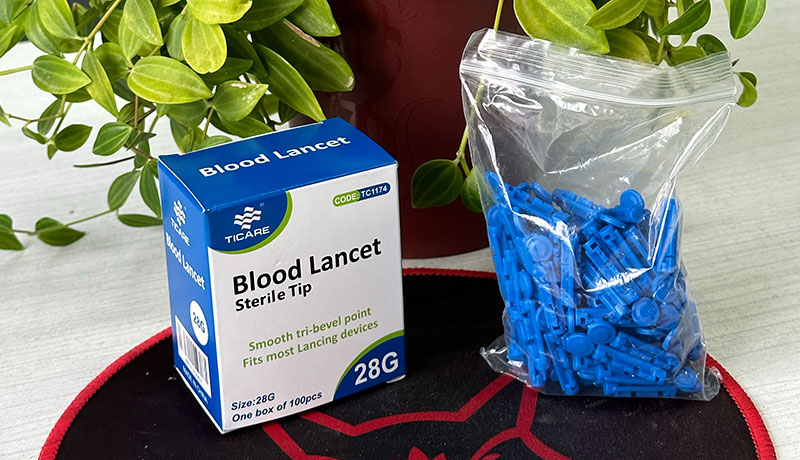
- Used with lancing devices
- Manual activation
- Cost-effective
- Ideal for homecare and retail distribution
Best for: pharmacies, personal-use markets
- Auto-retracting needle
- Single-use, preloaded
- Prevents needlestick injuries
Best for: hospitals, clinics, government tenders
Increasingly recommended by regulatory bodies like the Occupational Safety and Health Administration
- One-step activation
- Consistent penetration depth
- Minimal user training required
Best for: mass screening programs
Best for: labs, neonatal care, specialized diagnostics
Gauge is one of the most misunderstood—but most important—factors when selecting blood lancets.
- Higher number = thinner needle
- Lower number = thicker needle
| Gauge | Thickness | Use Case |
|---|---|---|
| 23–28G | Thick | High blood volume tests |
| 30G | Medium | General use (most common) |
| 31–33G | Thin | Low pain, home testing |
- Higher gauge (31–33G)
→ Less pain→ Lower blood volume
- Lower gauge (23–28G)
→ More blood flow→ Slightly more discomfort
- Hospitals: 28–30G
- Home users: 30–33G
- Laboratories: 23–28G
- Pediatrics: 31–33G
“Gauge selection should balance patient comfort and sample adequacy.”
- Self-monitoring blood glucose (SMBG)
- Long-term chronic care
- Routine blood tests
- Infection detection
- Emergency diagnostics
- High-volume testing
- Screening programs
- Fastest-growing segment
- Driven by remote healthcare trends
According to global healthcare studies, chronic disease growth continues to expand demand for blood sampling devices.
Safety is the #1 decision factor for institutional buyers.
- Single-use only
- Sterile packaging
- Safe disposal required
- Safety lancets reduce risks significantly
- Mandatory in many healthcare systems
When sourcing lancets, ensure compliance with:
- FDA (U.S.)
- CE Mark (EU)
- ISO 13485 (Quality Management)
“Single-use devices are essential to prevent cross-contamination.” — World Health Organization
This is where most buyers make or lose money.
ISO-certified manufacturing
Sterility assurance
Needle sharpness consistency
- OEM/ODM support
- Custom gauge production
- Branding options
- Bulk pricing tiers
- Long-term cost stability
- Competitive margins
- Lead times
- Export experience
- Logistics capability
- Private labeling
- Packaging design
- Regional compliance adaptation
✔ ISO & CE certified production
✔ Competitive bulk pricing
✔ OEM & private label available
✔ Fast global shipping
Request a Free Quote from TicareHealth Now
Get Samples Before Bulk Order
Avoid these costly errors:
- Choosing lowest price over safety
- Ignoring certifications
- Selecting wrong gauge for application
- Not verifying supplier capacity
- Overlooking user comfort
- 31–33G lancets are the least painful
- In many regions, yes—especially for infection control compliance
- No. Reuse increases infection risk significantly
- ISO 13485, CE, FDA registration
- 30G is the standard for general use
Choosing the right blood lancet comes down to four key factors:
- Type (standard vs safety)
- Gauge (comfort vs blood volume)
- Compliance (certifications & safety)
- Supplier reliability
For B2B buyers, the real competitive advantage lies in partnering with a supplier who can deliver consistent quality, scalable production, and regulatory compliance.
- Blood lancets (standard & safety)
- Custom OEM manufacturing
- Bulk wholesale supply
- Global distribution
Contact Us Today for Bulk Pricing
Request Product Samples
Start Your Private Label Project

sign up for our newsletter to receive the latest news, exclusive offers, and other discount information.