0086-592-5566387
 enquiry@ticarehealth.com
We serve all people who pursue high quality and personal customization for healthy life all over the world .
Categories
Latest blog
Tags
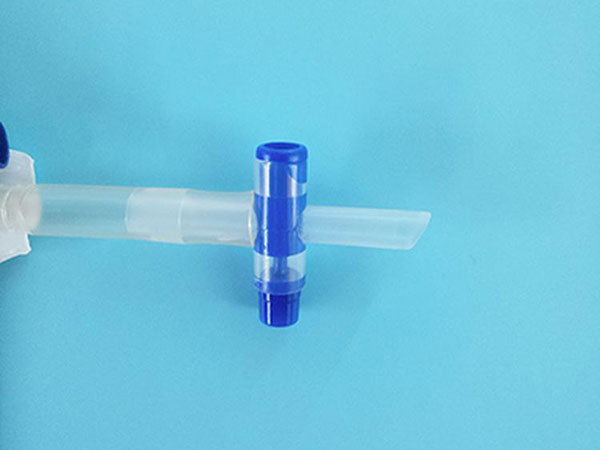
Urinary drainage bags are often evaluated by capacity, tubing length, connector type, or overall appearance. While these specifications are important, one of the most influential components is also one of the smallest—the drainage outlet. Its design determines how easily the bag can be emptied, how securely it seals after drainage, and how consistently it performs throughout routine use.
Among the outlet configurations available on the market, the urine bag with T valve is widely used in hospitals, long-term care facilities, and home healthcare. The T-shaped valve is designed to provide controlled drainage while maintaining a secure closure when the collection bag is not being emptied. Although the mechanism appears simple, its performance depends on precise engineering, material selection, and manufacturing control.
For companies sourcing urinary drainage products, the outlet design is more than a convenience feature. It influences product reliability, production consistency, and the overall quality expected by healthcare providers. Two drainage bags may appear almost identical in photographs or product catalogs, yet perform very differently because of differences in valve construction, molding accuracy, or assembly processes.
This article examines the engineering principles behind the T-valve design, explains why it has become a common solution for urinary drainage systems, and highlights the manufacturing factors that separate dependable products from visually similar alternatives. Rather than focusing on marketing features, the discussion centers on the technical details that influence long-term product performance and supplier consistency.
The drainage outlet is the only part of a urine collection bag that is repeatedly opened and closed during normal use. Unlike the collection chamber or tubing, which primarily remain static, the outlet is a moving component that experiences regular mechanical stress. Its performance directly affects ease of handling, cleanliness during drainage, and confidence that the bag will remain securely sealed afterward.
This repeated operation makes the outlet one of the most demanding parts of the product from an engineering perspective. It must provide smooth operation without requiring excessive force while maintaining sufficient sealing performance to prevent unintended leakage. Achieving this balance requires careful control of component geometry, material flexibility, and manufacturing tolerances.
Inconsistent outlet performance is often one of the earliest indicators of manufacturing variation. A valve that feels too stiff, closes unevenly, or requires additional pressure to achieve a complete seal may suggest inconsistencies in molding, assembly, or material quality. Although these differences may seem minor during an initial inspection, they become increasingly important when products are supplied repeatedly over long-term purchasing programs.
For this reason, experienced manufacturers pay particular attention to outlet design during product development. The objective is not simply to produce a valve that functions once, but to create a mechanism that performs consistently across large production volumes while maintaining stable quality from batch to batch.
A urine bag with T valve incorporates a T-shaped outlet mechanism positioned at the bottom of the collection bag. The valve controls the release of collected urine while allowing the drainage pathway to remain securely closed between emptying procedures.
Although different manufacturers may use slightly different configurations, the basic operating principle remains similar. Rotating or manipulating the T-shaped outlet opens the drainage channel, allowing urine to flow through the outlet under gravity. Returning the valve to its closed position restores the seal, enabling the collection bag to continue functioning as part of the urinary drainage system.
The effectiveness of this seemingly straightforward mechanism depends on the interaction of several carefully engineered components. The valve body must maintain accurate dimensions, sealing surfaces must align correctly, and the surrounding outlet assembly must be securely integrated with the collection bag. Any variation in these elements can influence operating force, sealing performance, and user confidence.
Unlike decorative or cosmetic product features, the outlet valve performs a functional role every time the drainage bag is emptied. Its design therefore deserves the same engineering attention as other critical components within the drainage system.
A well-designed valve is not defined solely by its appearance. Its quality is determined by how consistently it performs under routine handling throughout the intended use of the product.
One of the most important engineering considerations is the relationship between opening force and sealing force. If the valve requires excessive force to operate, drainage becomes unnecessarily difficult, particularly when gloves are worn or repeated handling is required. Conversely, if the valve opens too easily or lacks sufficient sealing pressure, the risk of unintended leakage increases.
Achieving the appropriate balance requires precise control of component dimensions during tooling and molding. Small dimensional variations that are almost impossible to detect visually can significantly affect valve operation. This is why experienced manufacturers place considerable emphasis on tooling maintenance, process validation, and dimensional inspection during production.
The geometry of the sealing surfaces is equally important. A reliable seal depends on accurate contact between mating components rather than excessive compression. Proper sealing geometry allows the valve to close securely while minimizing wear during repeated operation.
Material behavior also plays a central role. Polymer components must retain sufficient flexibility to support smooth movement without permanent deformation. If material properties vary between production batches, valve performance may become inconsistent even when component dimensions remain unchanged.
These engineering principles explain why drainage bags that appear nearly identical may deliver noticeably different user experiences. Reliable performance is the result of controlled manufacturing rather than external appearance alone.
Materials used in urinary drainage bags must satisfy a combination of mechanical, clinical, and manufacturing requirements. The collection chamber, drainage tubing, and outlet valve each perform different functions, making material selection an essential part of product design.
Medical-grade PVC remains one of the most commonly used materials for urine collection bags because it provides a practical balance of flexibility, transparency, weldability, and cost efficiency. Transparency allows healthcare professionals to observe urine output and appearance without disturbing the system, while flexibility enables the bag to adapt to different positioning requirements during use.
The valve mechanism, however, places additional demands on the material. Repeated opening and closing require stable mechanical properties so that the valve maintains predictable operation throughout its intended service period. Materials that become brittle, deform under stress, or vary significantly between production batches can affect both handling and sealing performance.
International markets may also specify additional material requirements. Many healthcare organizations request DEHP-free options or compliance with specific regional regulations. Manufacturers capable of offering validated material alternatives are generally better positioned to support diverse regulatory environments without compromising production consistency.
Material quality should therefore be evaluated as part of an integrated manufacturing process rather than as an isolated specification. Consistent raw materials contribute not only to product durability but also to stable processing, reliable assembly, and repeatable product performance.
The performance of a T-valve is established long before the finished drainage bag reaches a healthcare facility. It begins during mold design, process development, and production planning.
Injection molds used for valve components must be manufactured to tight tolerances to produce consistent dimensions throughout large production runs. Wear in tooling, unstable processing conditions, or insufficient process control can gradually introduce variations that affect component fit and valve operation.
Assembly precision is equally critical. The outlet assembly must align accurately with the drainage bag to ensure smooth operation and maintain sealing integrity. Poor alignment can increase operating resistance or reduce sealing reliability, even when individual components meet dimensional specifications.
Many manufacturers rely on automated or semi-automated assembly systems to improve consistency, but automation alone does not guarantee quality. Stable production depends on validated processes, routine equipment maintenance, and continuous monitoring of critical manufacturing parameters.
Quality-oriented manufacturers therefore view production as a controlled system rather than a sequence of independent steps. Raw material inspection, tooling maintenance, process validation, in-process monitoring, and final inspection all contribute to the consistency expected from medical devices supplied to healthcare markets.
This systematic approach becomes particularly important for organizations that require repeat orders over many years. Consistent manufacturing reduces variation between shipments, supports regulatory compliance, and helps maintain confidence in the finished product.
Medical devices are expected to meet defined specifications, but long-term product performance depends on more than passing a final inspection. For urinary drainage bags, consistent quality is established through controlled manufacturing rather than relying solely on end-of-line testing.
The T-valve provides a good example. A finished product may appear acceptable during a visual inspection, yet small variations in molding accuracy, assembly alignment, or material properties can influence how the valve operates in everyday use. These differences are not always immediately visible, but they become apparent over repeated production runs or when comparing products from different manufacturers.
For this reason, manufacturers with mature quality systems place greater emphasis on process control than on correcting defects after production. Every stage—from raw material verification to final packaging—should be designed to minimize variation before it reaches the finished product.
This approach not only improves product reliability but also creates the consistency expected by hospitals, distributors, and private-label brands that depend on stable supply over many years.
Reliable manufacturing starts well before the first component is molded.
Raw materials should be evaluated against predefined specifications to confirm their physical and chemical properties before entering production. Variations in polymer quality, even when small, can affect flexibility, transparency, weldability, and valve performance. Controlling material quality at the beginning of the process helps prevent downstream problems that are more difficult and more expensive to correct.
Tooling is another critical factor. Injection molds gradually wear during continuous production, and even minor dimensional changes can influence the fit of precision components such as outlet valves. Regular mold maintenance and dimensional verification help maintain consistent part geometry throughout large manufacturing volumes.
Process parameters also require careful monitoring. Injection pressure, molding temperature, cooling time, and welding conditions all influence the finished product. Stable production is achieved when these parameters remain within validated operating ranges rather than being adjusted reactively to compensate for defects.
When these foundational controls are well managed, manufacturers are better positioned to produce drainage bags with predictable performance instead of relying on extensive sorting or rework after assembly.
Leak testing is one of the most recognized quality checks for urinary drainage bags, but it should not be viewed as the only measure of product quality.
A leakage test confirms that the finished system maintains its integrity under specified conditions. However, it does not evaluate every aspect of valve performance or manufacturing consistency. A product that passes a leak test may still exhibit differences in operating force, valve alignment, or handling characteristics if production processes are not adequately controlled.
Comprehensive quality assurance combines functional testing with process verification.
For example, manufacturers may verify that:
- The outlet valve opens and closes smoothly.
- The sealing surfaces engage correctly after repeated operation.
- Tubing connections maintain secure bonding.
- Graduation markings remain clear and legible.
- Welded joints meet defined strength requirements.
- Finished products remain within dimensional tolerances.
These evaluations provide a broader understanding of product quality than any single inspection alone.
Equally important is documenting inspection results and maintaining traceability throughout production. If a quality issue is identified later, production records should allow affected batches to be investigated quickly and accurately.
This level of traceability is an essential part of modern medical device manufacturing and supports both regulatory compliance and long-term supply confidence.
Sterility is often associated with the final sterilization step, but in practice it depends on a sequence of controlled manufacturing activities.
A urinary drainage bag intended for sterile use should be manufactured in an environment designed to minimize contamination before sterilization takes place. Clean production practices, controlled handling procedures, and appropriate packaging all contribute to maintaining product integrity.
Ethylene oxide (EO) sterilization remains one of the most widely used methods for polymer-based medical devices because it is compatible with materials commonly used in urinary drainage systems. However, sterilization must be validated to demonstrate that the required sterility assurance level is achieved without adversely affecting the product.
Validation is only part of the process. Packaging must also preserve the sterile barrier during transportation, storage, and distribution. Poor sealing, inadequate packaging materials, or damage during handling can compromise product integrity even when sterilization itself has been successfully completed.
For organizations supplying multiple international markets, documentation supporting sterilization validation, packaging performance, and batch traceability is often as important as the physical product itself.
A high-quality sample is relatively easy to produce. Delivering the same level of quality across hundreds of thousands of units is a far greater challenge.
This distinction is particularly important in medical consumables, where products are reordered repeatedly over extended periods. A distributor may qualify one shipment based on excellent performance, but long-term success depends on every subsequent shipment meeting the same standard.
Consistency is influenced by many interconnected factors, including material sourcing, tooling maintenance, process validation, equipment calibration, operator training, and quality management practices. Weakness in any of these areas can introduce gradual variations that become noticeable only after repeated production.
Examples include changes in valve operating feel, inconsistent tubing flexibility, differences in bag transparency, or variations in welding quality. Individually these issues may appear minor, but collectively they can affect user confidence and increase product complaints.
Manufacturers with established production systems focus on minimizing variation rather than simply correcting defects. Statistical process monitoring, routine equipment maintenance, and standardized operating procedures all contribute to repeatable production.
For organizations developing long-term supply programs, this consistency is often more valuable than marginal differences in unit price.
Product specifications provide useful technical information, but they reveal only part of a manufacturer's capability.
Two suppliers may offer drainage bags with similar capacities, tubing lengths, and material descriptions, yet their manufacturing systems can differ significantly. These differences often become apparent only after production begins or repeat orders are delivered.
When comparing manufacturers, it is worthwhile to look beyond the product datasheet and understand how quality is achieved.
Areas worth evaluating include:
- The maturity of the quality management system.
- Manufacturing experience with medical consumables.
- Process validation practices.
- Incoming material controls.
- In-process inspection procedures.
- Final product testing.
- Batch traceability.
- Change management procedures.
- Technical documentation support.
A supplier capable of explaining these processes clearly usually demonstrates a stronger understanding of medical device manufacturing than one relying primarily on marketing claims.
Factory audits, production videos, inspection reports, and sample evaluations can all provide valuable insight into how consistently products are manufactured.
The objective is not simply to verify that a product meets today's requirements, but to understand whether the manufacturer can continue delivering the same quality over future production cycles.
Private-label and OEM projects often involve far more than adding a customer logo to existing packaging.
Different markets may require changes to labeling, packaging configuration, language, regulatory documentation, tubing length, connector design, or material specifications. Successfully managing these changes depends on manufacturing systems that can accommodate customization without compromising product consistency.
This requires close coordination between engineering, production, quality assurance, and regulatory teams. Design modifications should be documented, validated where necessary, and incorporated into controlled production procedures rather than managed through informal adjustments.
An experienced OEM manufacturer understands that customization must remain compatible with validated manufacturing processes. Maintaining this balance allows product variations to meet customer requirements while preserving the quality standards expected of medical devices.
For organizations building their own product portfolio, this capability provides flexibility without introducing unnecessary manufacturing risk.
Selecting an OEM manufacturing partner for urinary drainage bags is a long-term business decision rather than a single purchasing transaction. Competitive pricing is naturally an important consideration, but it should be evaluated alongside production capability, quality management, regulatory support, and the manufacturer's ability to deliver consistent products over time.
In many markets, hospitals and healthcare distributors expect every shipment to match previously approved specifications. A change in valve operation, tubing flexibility, packaging quality, or product appearance may trigger additional inspections or delay product acceptance, even when the device continues to meet basic technical requirements. Maintaining consistency across successive production runs is therefore just as important as meeting the initial specification.
A capable OEM manufacturer should be able to demonstrate how quality is maintained throughout the production process rather than relying solely on final inspection results. This includes documented procedures for material qualification, equipment maintenance, process validation, in-process monitoring, finished product inspection, and batch traceability. Together, these controls reduce variation and support repeatable production over the life of a supply program.
Communication is equally important. Product development often involves adjustments to packaging, labeling, regulatory documentation, or branding to meet the requirements of different markets. Manufacturers with established project management processes can evaluate these requests systematically, ensuring that changes are implemented without disrupting validated production procedures or compromising product quality.
For organizations developing private-label product lines, the value of an OEM partner extends beyond manufacturing capacity. Technical support during product development, responsiveness to specification changes, and the ability to provide complete documentation all contribute to smoother product launches and more efficient long-term cooperation.
Online searches frequently include terms such as "price urine bag with T valve" or "urine bag with T valve sale." While these searches suggest a focus on cost, unit price alone rarely reflects the true value of a medical consumable.
Several factors influence the final quotation for a urine drainage bag with a T-valve. Material grade, bag capacity, tubing specifications, outlet design, sterilization method, packaging configuration, regulatory requirements, and order volume all affect manufacturing costs. Products that appear similar in photographs may differ substantially in their technical specifications and quality management processes.
Transportation, packaging durability, and documentation should also be considered when evaluating overall supply costs. A lower purchase price may offer little advantage if inconsistent quality leads to additional inspections, product returns, or interruptions in supply. Conversely, a manufacturer with stable production processes and reliable quality control can help reduce operational costs by minimizing variability across shipments.
For organizations managing recurring procurement programs, total supply reliability often has a greater impact than small differences in unit pricing.
Search data also includes variations such as "catheter urine bag with T valve," "male urine bag with T valve," "female urine bag with T valve," and "unisex urine bag with T valve." These terms are useful for understanding how users search, but they can easily be misunderstood.
The urine collection bag itself is generally not designed specifically for male or female patients. In most cases, compatibility depends on the urinary catheter system, connector configuration, and intended clinical application rather than the collection bag alone.
A T-valve drainage bag may therefore be used across a wide range of care settings, provided it is compatible with the appropriate catheter and drainage system. Product selection should focus on technical compatibility, drainage capacity, outlet configuration, tubing characteristics, and applicable regulatory requirements rather than gender-based descriptions.
Understanding this distinction helps prevent specification errors and encourages more accurate product evaluation, particularly when comparing products from multiple manufacturers or preparing documentation for different markets.
Reliable partnerships are established through consistent performance rather than individual transactions.
As healthcare systems continue to place greater emphasis on quality assurance and regulatory compliance, manufacturers are expected to demonstrate not only that their products meet technical specifications, but also that those specifications can be maintained throughout ongoing production. This expectation applies equally to standard product lines and customized OEM programs.
Confidence is built through transparency. Clear technical documentation, responsive engineering support, traceable manufacturing records, and consistent communication all contribute to a stronger working relationship. When technical questions arise, manufacturers should be able to explain how a product is produced, how quality is verified, and how changes are controlled—not simply provide a specification sheet.
For distributors, importers, healthcare suppliers, and private-label brands, this level of transparency reduces uncertainty and supports more informed decision-making. It also creates a stronger foundation for long-term cooperation as product portfolios expand or market requirements evolve.
Although the drainage outlet occupies only a small portion of a urinary drainage bag, its design has a significant influence on product performance, manufacturing consistency, and overall user confidence. The T-valve is more than a convenient drainage mechanism; it is a precision component whose reliability depends on careful engineering, appropriate material selection, controlled manufacturing processes, and rigorous quality management.
Evaluating a urine bag with a T-valve therefore involves looking beyond basic product specifications. Manufacturing capability, process stability, sterility assurance, documentation, and production consistency all play important roles in determining whether a product can support long-term supply requirements. These factors become increasingly important when products are supplied across multiple healthcare markets or incorporated into private-label programs, where consistent performance is expected from one shipment to the next.
As the global medical device industry continues to prioritize quality, traceability, and regulatory compliance, manufacturers that invest in robust production systems are better positioned to deliver reliable urinary drainage solutions. Organizations comparing suppliers will benefit from focusing not only on the finished product, but also on the engineering expertise and manufacturing disciplines that make consistent quality possible.
If you are evaluating urine drainage bags with T-valve outlets for distribution, healthcare supply, or OEM branding, working with a manufacturer that combines technical expertise, validated production processes, and comprehensive quality management can provide greater confidence throughout the product lifecycle.
TICARE Health specializes in the manufacturing and OEM supply of medical consumables for global healthcare markets. Our urine drainage bag portfolio includes multiple outlet configurations, capacities, and customization options designed to support hospital procurement, distribution networks, and private-label programs. Every project is supported by structured quality management, technical documentation, and manufacturing processes focused on consistent product performance.
If you would like to discuss product specifications, request samples, or explore OEM customization for urine drainage bags with T-valve outlets, our technical team is available to provide detailed product information and manufacturing support tailored to your project requirements.

sign up for our newsletter to receive the latest news, exclusive offers, and other discount information.