0086-592-5566387
 enquiry@ticarehealth.com
We serve all people who pursue high quality and personal customization for healthy life all over the world .
Categories
Latest blog
Tags
Healthcare markets rarely stand still. Across developed and emerging economies alike, respiratory care is becoming an increasingly important part of healthcare planning, procurement strategy, and medical product expansion. Hospitals are modernizing respiratory departments. Distributors are broadening their portfolios. Healthcare brands are searching for faster and more flexible ways to enter growing medical device categories.
At the same time, global demand patterns are shifting. Aging populations, rising respiratory disease prevalence, increased healthcare access, and investment in clinical infrastructure are creating new momentum across the respiratory device market. This change is influencing not only how products are purchased, but also how they are developed, branded, and distributed.
Within this evolving environment, private label medical devices are attracting greater attention. Businesses are no longer looking only for manufacturing capacity; they are seeking strategic partnerships that allow them to build recognizable brands while remaining agile in competitive markets.
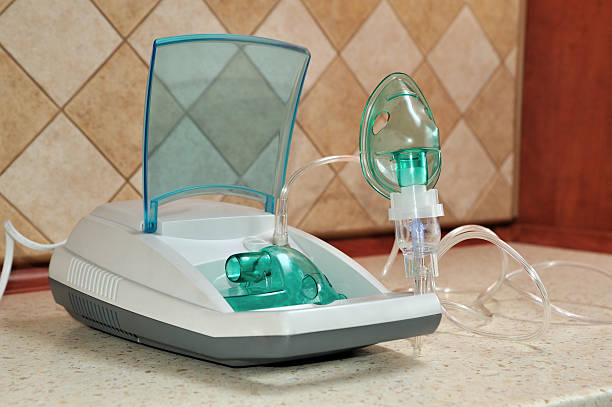
Among the categories benefiting from this shift, the private label compressed air jet nebulizer has emerged as a notable opportunity. Long recognized for its role in respiratory therapy, the compressed air nebulizer category continues to demonstrate steady clinical demand across hospitals, clinics, home healthcare channels, and institutional purchasing environments. For distributors and healthcare companies, it represents more than a treatment device. It increasingly represents a scalable business opportunity.
As global healthcare ecosystems continue expanding, compressed air jet nebulizers are becoming part of a larger conversation—one focused on market access, supply chain flexibility, and long-term growth potential.
The global respiratory care landscape is entering a new phase. Healthcare systems are expanding beyond traditional purchasing models and moving toward more adaptable sourcing strategies. This transition is creating fresh opportunities for businesses that want greater control over branding, pricing, and market positioning.
Private label models are gaining traction because they offer flexibility without requiring companies to build manufacturing infrastructure from the ground up. A respiratory equipment supplier can introduce a customized product line while relying on the production expertise of an experienced OEM nebulizer supplier. That approach shortens development timelines and creates room for faster market response.
The respiratory device market itself is also becoming more dynamic. Regional healthcare expansion in Southeast Asia, the Middle East, Latin America, and parts of Africa is opening doors for medical product distributors and healthcare brands looking for scalable growth opportunities.
Within these developments, the medical compressed air nebulizer occupies a particularly attractive position. It serves a well-established clinical function while also offering strong potential for private-label differentiation. As demand for respiratory care continues evolving across global markets, businesses are beginning to see compressed air jet nebulizers not simply as devices, but as platforms for long-term market expansion.
The global healthcare landscape is changing in ways that extend far beyond hospitals and treatment rooms. Across regions, healthcare systems are expanding, procurement behavior is evolving, and medical distribution networks are becoming increasingly interconnected. These shifts are creating fertile ground for private label opportunities, particularly in respiratory care categories with stable long-term demand.
Compressed air jet nebulizers sit at an interesting intersection of clinical necessity and commercial scalability. They are familiar products with established healthcare applications, yet they also offer room for branding flexibility and market positioning. As healthcare systems grow and regional distribution models mature, businesses are beginning to see that opportunity through a broader lens.
What was once a straightforward product category is gradually becoming part of a larger global sourcing strategy.
Healthcare investment is accelerating across many parts of the world. New hospitals are opening. Existing healthcare networks are expanding. Community care programs are reaching populations that previously had limited access to respiratory treatment services. These developments create ripple effects throughout medical purchasing ecosystems.
As infrastructure grows, so does demand for reliable respiratory equipment and long-term supplier relationships. Hospital nebulizer procurement processes increasingly focus on standardization, scalability, and supply continuity rather than isolated product purchases. This shift is creating opportunities for companies looking to participate in larger healthcare supply chains.
For distributors and healthcare brands, private label strategies become especially attractive in this environment. Instead of investing heavily in manufacturing capabilities, organizations can collaborate with a compressed air jet nebulizer manufacturer or an established medical nebulizer factory to bring products to market under their own identity.
This model creates flexibility. It can also simplify expansion into new territories.
Meanwhile, respiratory therapy equipment suppliers are seeing increased interest from buyers looking beyond one-time transactions. Bulk nebulizer purchase discussions are increasingly tied to long-term procurement planning and portfolio development. In many cases, product sourcing is becoming a strategic growth decision rather than a purely operational one.
Some of the most significant changes are taking place in emerging healthcare economies.
Regions such as Southeast Asia, Latin America, the Middle East, and parts of Africa are investing heavily in healthcare capacity and medical infrastructure. Population growth, urbanization, and increased access to healthcare services are creating stronger demand across many respiratory categories.
This expansion is influencing global medical device markets in important ways.
Healthcare organizations in these regions are not always following historical purchasing patterns established in mature markets. Instead, many are building new procurement systems from the ground up. Healthcare equipment distributors entering these environments often prioritize sourcing flexibility, adaptable supply models, and partnerships capable of supporting long-term expansion.
Respiratory equipment demand continues to rise alongside these developments. Hospitals and healthcare institutions increasingly require dependable institutional respiratory products that fit local market realities and purchasing structures.
At the same time, medical supply chain resilience has become a larger conversation. Recent global disruptions exposed vulnerabilities in traditional sourcing models. Buyers now pay closer attention to manufacturing location diversity, inventory planning, and regional distribution support.
As a result, sourcing decisions increasingly involve both market growth strategy and operational risk management.
Different regions are developing distinct sourcing priorities, and those priorities are influencing how respiratory products move through global markets.
In some developed healthcare systems, medical equipment sourcing strategies increasingly focus on supplier diversification and procurement efficiency. In contrast, rapidly growing regions may prioritize affordability, scalability, and fast market availability.
Global distribution channels are becoming more flexible as these patterns evolve. Respiratory care procurement is no longer driven by a one-size-fits-all model. Instead, healthcare purchasing trends increasingly reflect regional realities, reimbursement systems, and local healthcare expansion priorities.
For businesses exploring private label opportunities, understanding these shifts may prove just as important as understanding the product itself. Because in international healthcare markets, sourcing strategy often determines market opportunity.
Medical markets have become more competitive, more global, and far more dynamic than they were a decade ago. Product quality remains important, but today growth is often driven by speed, adaptability, and the ability to build a recognizable presence in the market.
For many healthcare businesses, the challenge is no longer identifying demand. Demand already exists. The bigger question is how to enter attractive product categories efficiently without taking on the cost and complexity of manufacturing infrastructure.
Private label is no longer optional in many emerging respiratory markets—it is becoming the default entry strategy.
Rather than viewing private labeling as a simple sourcing arrangement, many organizations now see it as a business growth model. It provides a way to expand product offerings, strengthen market identity, and scale operations while maintaining flexibility in increasingly competitive environments.
For distributors, healthcare brands, and procurement organizations, that flexibility matters.
Building a recognizable medical brand traditionally required significant investment. Production facilities, engineering teams, quality systems, and manufacturing resources often created high barriers to entry. Today, that model is changing.
Working with a private label nebulizer manufacturer allows businesses to establish product ownership without carrying the burden of operating production infrastructure. Instead of allocating substantial resources toward factory development, organizations can focus on branding, distribution strategy, customer relationships, and market expansion.
This approach creates room for stronger medical device branding initiatives. A healthcare company can introduce products under its own identity while leveraging the manufacturing expertise of an experienced OEM nebulizer supplier.
The shift is subtle but important.
The conversation moves away from manufacturing capacity and toward market positioning.
For many organizations, a nebulizer distributor partnership offers something beyond supply access. It provides the ability to create product consistency across catalogs, strengthen customer recognition, and develop a long-term brand presence within respiratory care markets.
Over time, those advantages can become powerful competitive assets.
Speed increasingly influences healthcare opportunities.
Markets evolve quickly. Distribution landscapes change. Procurement priorities shift. Organizations that move efficiently often gain advantages before competitive environments become crowded.
Developing medical products internally can require extensive timelines. Product engineering, manufacturing validation, regulatory preparation, and production setup frequently involve substantial investment before products even reach buyers.
Private label strategies can shorten that process.
Collaborating with a wholesale nebulizer machine supplier enables businesses to enter markets using established production systems rather than creating them from scratch. Existing manufacturing capabilities, tested processes, and mature supply structures can reduce complexity across multiple stages of product introduction.
The financial impact can be significant.
Development expenses often become more predictable. Supply chain efficiency may improve because sourcing relationships and production workflows are already established. Medical equipment sourcing can move from a lengthy infrastructure project to a more focused market execution strategy.
At the same time, organizations gain flexibility in managing compressed air nebulizer price positioning within different regions and customer segments.
That flexibility becomes increasingly valuable in diverse global markets where purchasing conditions vary considerably.
Growth rarely comes from relying on a single product category. Strong healthcare businesses often expand through carefully constructed portfolios that address multiple clinical and purchasing needs.
Private labeling supports that approach.
A company already offering respiratory therapy products may choose to expand into adjacent categories without creating entirely new manufacturing ecosystems. By working with an experienced respiratory equipment supplier, businesses can broaden product availability while maintaining a consistent market identity.
This creates strategic advantages beyond simple product additions.
A stronger healthcare distribution strategy can improve customer retention, create cross-selling opportunities, and strengthen long-term procurement relationships. Buyers frequently prefer suppliers capable of offering integrated respiratory solutions rather than isolated products.
As respiratory markets continue evolving, scalability may increasingly depend on breadth, flexibility, and the ability to adapt product portfolios to changing healthcare demand.
For many organizations, private labeling is becoming one of the most practical ways to achieve that expansion.
Selecting a manufacturing partner for respiratory equipment is rarely a simple sourcing decision. It is a long-term strategic commitment that can influence product quality, market reputation, regulatory success, and supply stability across multiple regions. In the case of compressed air jet nebulizers, the importance of careful evaluation becomes even more critical due to their widespread clinical use and the regulatory sensitivity of medical device markets.
A strong partnership is not defined only by production capability. It is defined by consistency, compliance readiness, and the ability to support business growth over time. For distributors, healthcare brands, and procurement organizations, the evaluation process should extend far beyond pricing discussions and catalog specifications.
True manufacturing partnership selection is about trust built on operational depth.
At first glance, many suppliers may appear similar. Production scale, facility size, and output capacity are often highlighted as primary selling points. However, for compressed air jet nebulizer manufacturer selection, these factors only represent the surface level.
A reliable medical nebulizer factory should demonstrate far more than the ability to produce large volumes. The real differentiator lies in process control, engineering consistency, and quality assurance systems embedded within production workflows.
An experienced OEM respiratory device supplier typically invests in standardized production lines, component traceability systems, and multi-stage testing protocols. These systems ensure that every device performs consistently across batches, markets, and clinical environments.
Equally important is the supplier’s ability to adapt production to different market requirements. Regional specifications, packaging standards, and clinical expectations often vary. Manufacturers that can adjust without compromising quality provide a stronger foundation for long-term cooperation.
In this context, production capacity is not the deciding factor. Controlled scalability is.
In medical device sourcing, regulatory readiness is not optional. It is the foundation of market access.
A qualified manufacturing partner must demonstrate full alignment with international regulatory frameworks. This includes FDA medical device compliance for the United States, CE certification medical devices requirements for Europe, and adherence to ISO 13485 manufacturer quality management systems.
These certifications are more than formal approvals. They reflect whether a supplier operates under structured quality systems that can withstand audits, inspections, and evolving global medical regulations.
For buyers, regulatory alignment directly affects speed to market. Without proper compliance documentation, even a high-quality product may face delays, restrictions, or outright rejection in target markets.
Beyond certifications, it is equally important to evaluate how deeply compliance is embedded in daily operations. A strong supplier does not treat regulatory standards as documentation exercises. Instead, compliance becomes part of engineering design, production control, and post-manufacturing validation.
In respiratory equipment sourcing, regulatory strength often determines commercial success before the product even reaches the market.
In global healthcare markets, supply continuity is as important as product performance. A well-designed respiratory product loses value if it cannot be delivered consistently when demand increases.
A dependable medical supply chain depends on more than logistics planning. It requires stable raw material sourcing, predictable production scheduling, and resilient manufacturing operations that can respond to fluctuations in demand without disruption.
For compressed air jet nebulizer sourcing, buyers should carefully evaluate how the respiratory equipment supplier manages component availability and production flexibility. This includes assessing supplier networks, inventory strategies, and contingency planning for global disruptions.
Long-term sourcing strategy also depends on communication transparency. Reliable manufacturers maintain clear production timelines, provide accurate forecasting, and support buyers with realistic capacity planning.
Within medical equipment procurement, partnership stability often becomes a competitive advantage. Businesses that secure reliable supply relationships are better positioned to scale into new markets, respond to demand surges, and maintain consistent service levels across distribution channels.
Over time, supply chain reliability becomes less of an operational detail and more of a strategic asset.
Before finalizing any OEM manufacturing relationship, buyers should take a structured evaluation approach. A clear OEM evaluation checklist helps reduce uncertainty and ensures alignment between commercial expectations and manufacturing capability.
Key questions should include how the supplier manages quality control across production batches, how they handle regulatory documentation for different markets, and how flexible their production systems are for customization or scaling.
It is also important to understand how the medical manufacturing partnership is supported over time. This includes after-sales support, spare parts availability, and responsiveness to technical or regulatory changes.
A structured product sourcing process does not only reduce risk. It also strengthens long-term cooperation by ensuring both sides operate with clear expectations from the beginning.
In medical device sourcing, clarity at the evaluation stage often determines stability at the partnership stage.
The global respiratory care landscape is entering a phase defined less by isolated product innovation and more by system-level transformation. Healthcare demand is expanding, but so is complexity. Procurement expectations are shifting. Distribution networks are becoming more layered. And businesses are increasingly expected to deliver not just products, but adaptability.
Within this environment, private label compressed air jet nebulizers are positioned in a unique way. They sit at the intersection of stable clinical demand and evolving commercial strategy. This combination creates space for long-term opportunity rather than short-term market cycles.
Growth in this category is unlikely to come from a single direction. Instead, it will emerge from multiple overlapping forces shaping how respiratory care is delivered, sourced, and scaled globally.
Future expansion in respiratory equipment markets is being driven by several converging healthcare realities. Aging populations continue to increase baseline respiratory care demand. Chronic respiratory conditions remain prevalent across both developed and developing regions. At the same time, healthcare systems are investing in infrastructure that prioritizes accessibility and scalability.
These future respiratory care trends are not uniform across regions, but they consistently point toward one outcome: increased reliance on dependable, widely available respiratory devices.
In many cases, medical device market opportunities will not be defined by breakthrough technologies alone. They will emerge from improvements in access, distribution efficiency, and procurement scale. This is particularly relevant for established device categories such as compressed air jet nebulizers, which remain widely used in hospitals, clinics, and home care environments.
As healthcare distribution growth continues, demand is expected to shift toward suppliers who can support both volume requirements and regional adaptation. That combination will increasingly shape competitive advantage.
Traditional medical distribution models are becoming less centralized. Instead of relying on single-channel supply chains, healthcare organizations are adopting more flexible and diversified sourcing strategies. This evolution is reshaping how respiratory equipment reaches end users.
A modern medical device distribution strategy now often includes multiple parallel channels. Hospital procurement, private clinics, online medical platforms, and regional distributors all play a role in shaping product availability. This layered structure increases complexity, but also expands market reach.
Within the respiratory equipment market, this shift is especially visible. Products are no longer limited to a single purchasing pathway. Instead, they move through interconnected healthcare ecosystems that vary by region, regulation, and infrastructure maturity.
As healthcare channel expansion continues, suppliers that can adapt to multi-channel distribution models gain a structural advantage. Flexibility becomes more valuable than scale alone. The ability to support different purchasing behaviors, regulatory environments, and logistical requirements is becoming a defining factor in long-term success.
The global respiratory market is not short of demand. What it lacks is consistency in supply partnerships that can scale across regions, regulations, and purchasing cycles without friction. This is where the real opportunity in private label compressed air jet nebulizers becomes clear.
For distributors, healthcare brands, and procurement groups, the decision is no longer simply about sourcing a device. It is about securing a manufacturing relationship that can support long-term market expansion. A capable OEM nebulizer supplier is not just a production source—it becomes an extension of your commercial strategy.
In practical terms, the strongest partnerships are built on three foundations: stable manufacturing capability, verified regulatory compliance, and the ability to adapt product configurations for different market requirements. When these elements align, private label programs shift from being a sourcing option to becoming a scalable business model.
The businesses that are gaining momentum in this space are not necessarily those with the largest catalogs or the lowest prices. They are the ones that have established reliable OEM manufacturing relationships early, secured supply continuity, and positioned their brand within growing respiratory equipment markets before competition intensifies.
In a market where timing, reliability, and regulatory readiness directly influence revenue potential, waiting often costs more than acting. The compressed air jet nebulizer category remains stable, globally recognized, and widely used across healthcare systems—making it one of the most practical entry points for private label expansion.
For organizations ready to move beyond transactional sourcing, this is the moment to establish a structured OEM partnership that supports both immediate procurement needs and long-term brand development.
The opportunity is not in the product alone. It is in securing the right manufacturing foundation before the market fully consolidates.

sign up for our newsletter to receive the latest news, exclusive offers, and other discount information.