0086-592-5566387
 enquiry@ticarehealth.com
We serve all people who pursue high quality and personal customization for healthy life all over the world .
Categories
Latest blog
Tags
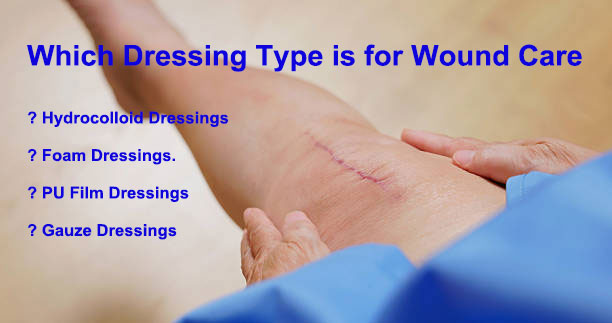
In professional wound care environments, dressing selection is influenced by product characteristics, facility protocols, and care workflows rather than individual preference. Healthcare facilities, distributors, and procurement teams typically stock multiple dressing categories to meet diverse wound management requirements. Understanding commonly selected dressing types helps clarify how wound care products are classified and used in professional settings.
This article provides an overview of widely used wound dressing categories and the factors that influence their selection in healthcare and institutional care environments.
Professional wound care settings—such as hospitals, clinics, long-term care facilities, and outpatient centers—rely on standardized product categories when selecting wound dressings. These selections are usually guided by:
- Dressing structure and material properties
- Occlusivity and breathability
- Absorption capacity
- Wear time expectations
- Compatibility with established wound care protocols
As a result, facilities often maintain an inventory of multiple wound care products rather than relying on a single dressing type.
Several dressing categories are commonly selected in professional wound care due to their distinct functional characteristics.
Hydrocolloid dressings are classified as occlusive or semi-occlusive dressings. They are typically composed of gel-forming materials combined with an adhesive backing. In professional settings, hydrocolloid dressings are often selected for their ability to create a sealed wound environment and their relatively extended wear time.
They are commonly included in wound care inventories for use across a variety of standardized care protocols.
Foam dressings are known for their absorptive structure and cushioning properties. They are generally non-occlusive or semi-occlusive, depending on their backing material. In professional wound care environments, foam dressings are often stocked for situations where absorption and comfort are key considerations.
Foam dressings are available in multiple thicknesses and formats to support different care settings.
PU film dressings are thin, transparent dressings typically classified as semi-occlusive. Their transparency allows for visual monitoring without removal, which is a feature valued in many professional environments.
PU film dressings are commonly included in wound care product ranges for surface protection and procedural support.
Gauze dressings are a traditional and widely used dressing category. They are typically non-occlusive, allowing airflow and moisture evaporation. Gauze dressings are frequently stocked due to their versatility, accessibility, and compatibility with a wide range of wound care applications.
They are often used in combination with secondary fixation or additional dressings.
Rather than selecting a single dressing type, professional wound care settings consider several non-clinical factors when evaluating products:
- Dressing classification (occlusive vs non-occlusive)
- Expected wear time and replacement frequency
- Ease of application and removal
- Packaging formats and storage requirements
- Supply consistency and inventory planning
These considerations help ensure that wound care products align with facility workflows and procurement standards.
Healthcare facilities and distributors typically stock multiple wound dressing categories to support varied care environments and procedural needs. Maintaining a diverse dressing inventory allows facilities to:
- Follow standardized care pathways
- Reduce supply interruptions
- Improve operational efficiency
- Ensure compatibility with existing wound care systems
As a result, commonly selected dressing types are viewed as complementary, not interchangeable.
Professional wound care relies on a range of dressing categories, each defined by its material structure and functional characteristics. Hydrocolloid, foam, PU film, and gauze dressings are among the most commonly selected types due to their established classifications and broad applicability. Understanding these categories supports informed product evaluation and effective wound care inventory planning.
Professional wound care settings commonly use hydrocolloid, foam, PU film, and gauze dressings. Each category offers distinct material properties that support standardized care protocols and facility requirements.
Hydrocolloid dressings are generally classified as occlusive or semi-occlusive. They form a sealed environment over the wound surface and are commonly included in professional wound care inventories.
Facilities stock multiple dressing types to support different care workflows, dressing classifications, and procedural needs. This approach improves flexibility and supply consistency.
No. Professional wound care environments typically rely on a range of dressing categories rather than a single dressing type, as product selection depends on standardized protocols and dressing characteristics.

sign up for our newsletter to receive the latest news, exclusive offers, and other discount information.